In-Depth Analysis of FRP Water Tank Corrosion Resistance: From Resin Selection to Structural Design
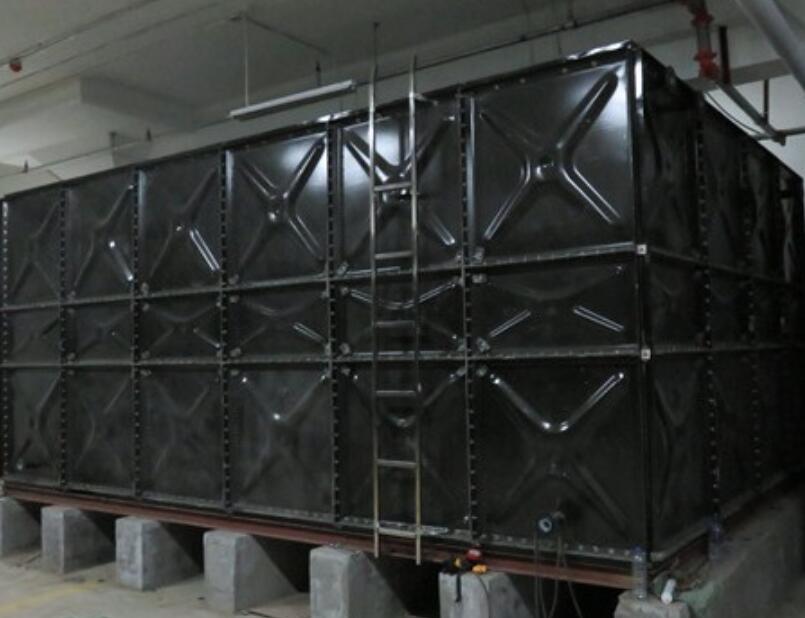
In-Depth Analysis of FRP Water Tank Corrosion Resistance: From Resin Selection to Structural Design
FRP (Fiberglass Reinforced Plastic) water tanks are widely used in municipal water supply, industrial liquid storage, and fire protection systems. Their corrosion resistance is the primary advantage, but it is not inherent—resin type, fiber layup, interface treatment, and service conditions all determine long-term durability. Beijing Yuanhui FRP Co., Ltd., with over two decades of production data and field inspection reports, breaks down the critical control points for FRP tank corrosion prevention.
1. Resin Matrix: The Genetic Blueprint of Corrosion Resistance
Three common resin types define corrosion performance:
- Orthophthalic polyester resin: Low cost, suitable for clean water at room temperature (pH 6-8). Hydrolysis occurs in acidic or alkaline media; long-term service temperature should not exceed 50°C. Beijing Yuanhui's accelerated aging tests show a 62% retention of flexural strength after 1000 hours in 5% sulfuric acid.
- Isophthalic polyester resin: Better chemical resistance, operable in pH 3-10. Under the same test conditions, flexural strength retention reaches 81%.
- Vinyl ester resin: Exceptional acid, alkali, and solvent resistance, stable in pH 1-12. Its shielded ester bonds provide 30% higher hydrolysis activation energy than unsaturated polyester. In a chemical plant project using vinyl ester tanks storing chlorinated wastewater (200 ppm active chlorine, 65°C), no corrosion points were found after 3 years; hardness loss was less than 5 Shore D.
Selection guide: For potable water, orthophthalic resin with food-grade liner is adequate. For industrial wastewater, acid/alkali adjustment, or high temperatures, isophthalic or vinyl ester resin is mandatory, and the supplier's chemical resistance chart must match actual conditions.
2. Fiber Reinforcement Design and Interface Barrier
Glass fiber provides strength but is vulnerable to hydrofluoric acid and strong alkalis (pH>12). Key design elements:
- Liner (resin-rich layer): Thickness ≥0.5 mm, resin content ≥90%, no fiber or only chopped strand mat. This is the primary barrier. Beijing Yuanhui uses a surface veil + vinyl ester resin process, achieving an oxygen index above 32%.
- Structural layer: Continuous glass fibers wound or hand-laid, resin content 55%-65%. Fiber orientation must match stress direction to avoid microcracks—pathways for corrosive media. FEA shows that winding angle deviation >5° reduces interlaminar shear strength by 18%.
- Outer protective layer: UV-stabilized gel coat, 0.3-0.5 mm thick, preventing surface degradation under sunlight.
Corrosion does not mean "no corrosion" indefinitely. Water molecules slowly permeate the resin and react with the fiber interface (interfacial hydrolysis). Beijing Yuanhui lab data shows 76% interfacial shear strength retention after 20,000 hours in deionized water at 60°C. For projects requiring >20-year life, liner thickness should exceed 1.0 mm with silane-treated E-glass fiber.
3. Environmental Impact on Corrosion Performance: Verified Data
Corrosion resistance is a function of temperature, concentration, pressure, and flow rate. Test data from Beijing Yuanhui and third-party labs:
| Condition | Resin Type | Duration (h) | Mass Change | Barcol Hardness Retention |
|---|---|---|---|---|
| 10% H₂SO₄, 60°C | Vinyl ester | 5000 | +0.12% | 93% |
| 20% NaOH, 40°C | Isophthalic | 3000 | +0.47% | 78% |
| 3% NaCl + 0.1% NaOCl, ambient | Orthophthalic | 2000 | +0.86% | 65% |
Every 10°C rise accelerates corrosion rate by 1.5-2 times. In high-temperature alkaline environments, isophthalic resin loses hardness rapidly; bisphenol-A or phenolic resin is recommended.
Case: A textile mill in southern China used orthophthalic tanks for dyeing wastewater (pH 9-10, 45-55°C). After 18 months, blistering and delamination appeared due to resin hydrolysis. Beijing Yuanhui replaced the system with isophthalic resin + 1.2 mm liner; no anomalies after 36 months.
4. Manufacturing Process and Quality Control for Corrosion Protection
Final corrosion performance depends on manufacturing precision:
- Cure degree: Incomplete curing leaves reactive groups accelerating hydrolysis. Beijing Yuanhui requires Barcol hardness ≥40 and acetone immersion test (no softening or dissolution).
- Voids and porosity: Hand layup can trap air, creating corrosion starting points. Vacuum-assisted resin infusion (VARI) reduces porosity below 0.5%, versus 1.5%-3% for hand layup.
- Joint sealing: Tank panel connections use corrosion-resistant rubber gaskets (EPDM or silicone) and stainless steel bolts to prevent galvanic corrosion and leakage.
Beijing Yuanhui performs 48-hour water leak tests and internal fluorescent leak detection on every tank. For export projects, a 5% salt spray test (ASTM B117) is added to verify exterior durability.
Conclusion
FRP water tank corrosion resistance is a system-level attribute: resin selection, layup design, manufacturing, and maintenance must be coordinated. Buyers should not rely solely on initial test reports but demand long-term corrosion data and case studies matching their service conditions. Beijing Yuanhui FRP Co., Ltd. offers integrated corrosion protection solutions from material selection to structural design, backed by decades of field experience.