FRP Water Tank Lining Anti-Corrosion Technology: Material Selection, Application Techniques, and Long-Term Protection
Introduction
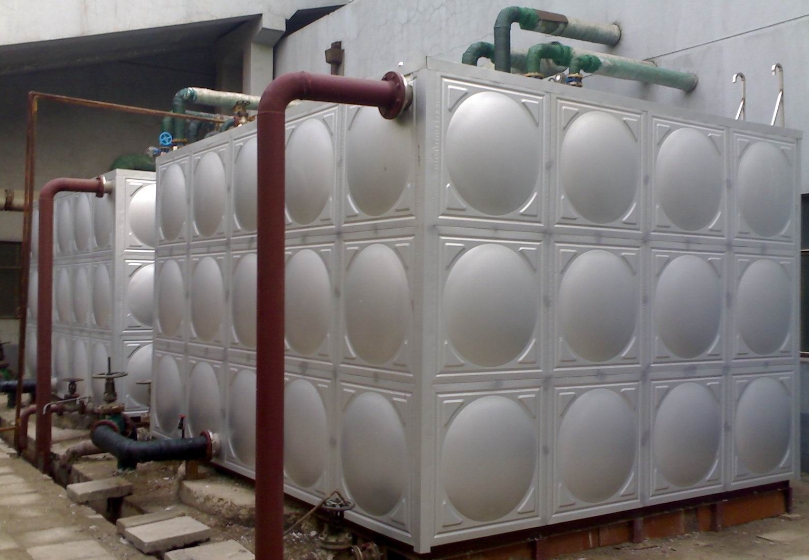
FRP (Fiberglass Reinforced Plastic) water tanks are widely used in municipal water supply, industrial cooling, and fire protection. However, long-term exposure to water—especially chlorinated, acidic, or high-mineral-content water—can lead to lining degradation, permeation, or microbial attack. Drawing on nearly two decades of field data, Beijing Yuanhui FRP Co., Ltd. finds that over 70% of tank repair cases originate from inadequate lining design or application. This article examines the core technologies of anti-corrosion lining from both material science and engineering perspectives.
1. Resin System Selection: The Foundation of Corrosion Resistance
The lining directly contacts the stored medium; resin chemistry determines service life. Beijing Yuanhui FRP Co., Ltd. typically selects from three resin families:
1.1 Bisphenol-A Epoxy Vinyl Ester
With a heat resistance of 120°C, it withstands up to 10% HCl, 30% H₂SO₄, and sodium hypochlorite. Accelerated tests show an annual corrosion rate below 0.02mm in pH 3-11. Recommended for industrial recirculating water and reclaimed water.
1.2 Isophthalic Unsaturated Polyester
Cost-effective for potable water tanks, complying with GB/T 17219. Water absorption after prolonged immersion is less than 0.3%, and styrene emission is controlled under 35ppm.
1.3 Food-Grade Epoxy
For direct drinking water systems, NSF/ANSI 61 certification is required. Beijing Yuanhui uses solvent-free formulations, yielding TDS leaching below 1mg/L.
Key data: After 2,000 hours of accelerated aging in chlorinated water (1.5mg/L residual chlorine, 45°C), the Barcol hardness retention of vinyl ester lining is 92%, versus 67% for standard polyester.
2. Fiber-Reinforced Layer Design: Synergy of Barrier and Structure
The lining is not a simple coating but a composite system of a resin-rich layer, an intermediate layer, and a structural layer. Beijing Yuanhui FRP Co., Ltd. adopts a "three-layer sandwich" design:
- Resin-rich layer (0.3–0.5mm): Resin content ≥90%, using C-glass surface veil as the primary permeation barrier.
- Intermediate reinforcement (1.5–2.5mm): Biaxial stitched mat + sprayed roving, fiber content 35%–45%, balancing impact resistance and impermeability.
- Structural layer: Continuous filament winding for overall stiffness.
A case study: a fire water tank in a chemical park using this design showed no blistering or cracking after 8 years, passing a hydrostatic test at 0.3MPa with zero leakage.
3. Surface Preparation and Application: Details Determine Durability
Application conditions: temperature 15–30°C, relative humidity ≤75%, dew-point margin ≥3°C. Beijing Yuanhui FRP Co., Ltd. follows a standardized procedure:
3.1 Grinding and Dust Removal
Surface roughened with 60–80 grit sandpaper to achieve Ra ≥50μm. Industrial vacuum combined with ethanol wiping reduces dust residue below 5mg/m².
3.2 Primer Coat
Low-viscosity primer (200–300mPa·s) brushed to penetrate micro-pores and seal air bubbles. Cured thickness ~0.1mm, Shore D hardness ≥75.
3.3 Overlap and Corner Treatment
All overlaps ≥50mm; corners rounded to R≥10mm with an extra 300g/m² chopped strand mat for local reinforcement.
Defect prevention: Pinholes detected by vacuum test (-0.05MPa for 2 minutes); bubbles controlled with roller deaeration, keeping area under 1% per layer.
4. Long-Term Performance and Engineering Cases
Beijing Yuanhui FRP Co., Ltd. tracked an 80m³ purified water tank for a pharmaceutical plant over 8 years:
- Lining thickness: initial 4.2mm → 4.1mm after 8 years (wear <0.1mm)
- Surface hardness: initial Barcol 38 → Barcol 36
- Water quality: conductivity change <0.5μS/cm; no metal ion leaching
In contrast, tanks without professional lining showed fiber exposure and leaking within 3 years. Over a 20-year life cycle, a proper lining scheme reduces total cost by 40%–55%.
Conclusion
FRP water tank lining is a systematic engineering task requiring meticulous resin selection, layer design, and application control. Beijing Yuanhui FRP Co., Ltd., leveraging its material database and process standards, delivers quantifiable corrosion protection. Combining water quality data, construction records, and periodic inspection is the only reliable path to achieving "lining life equal to tank life."