FRP Water Tank Lining Anti-Corrosion Technology: Material Selection & Process Essentials
Introduction
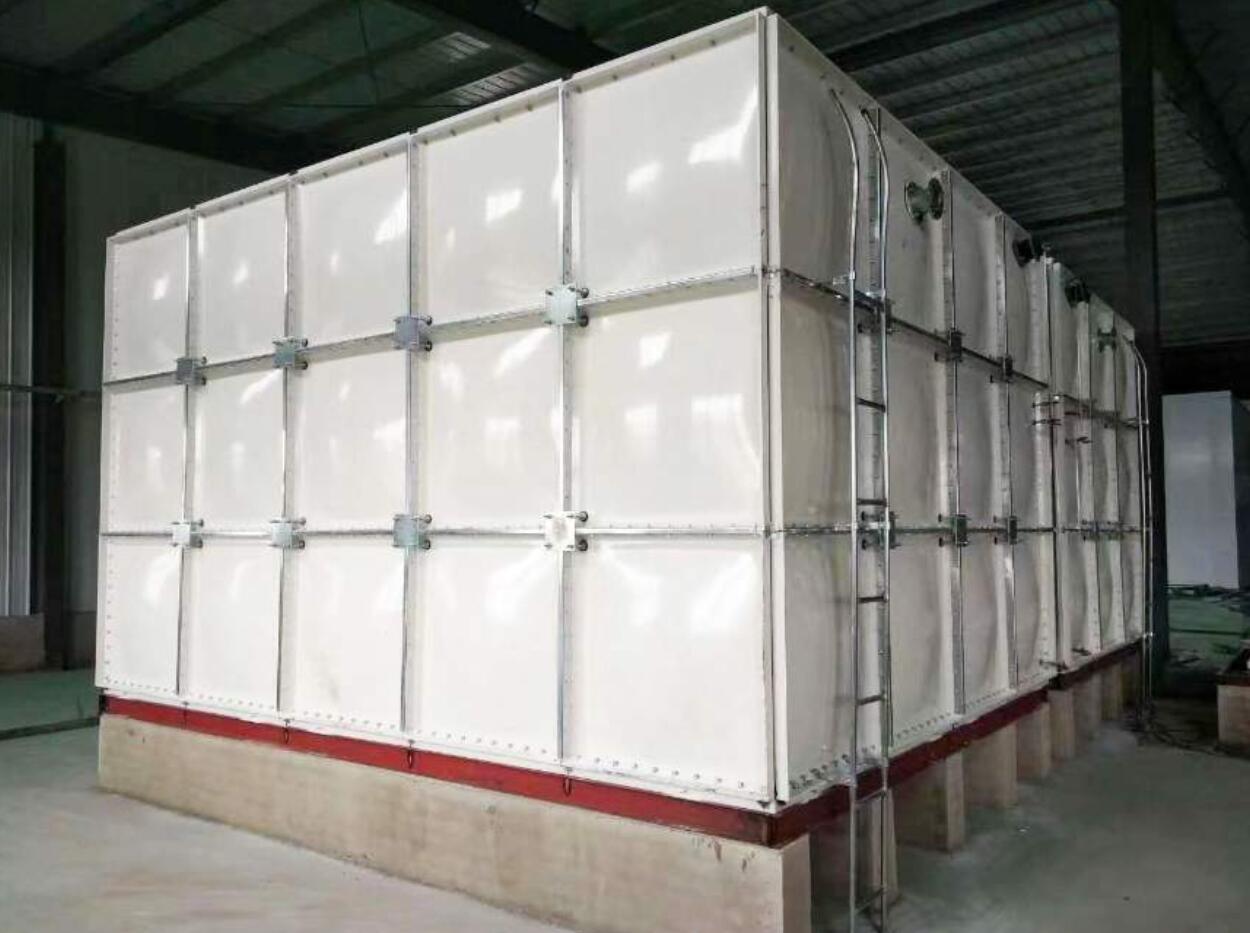
FRP water tanks are widely used in potable water supply, fire protection, and industrial cooling systems due to their lightweight and corrosion resistance. However, long-term exposure to fluctuating water chemistry and temperature can degrade the inner lining, leading to blistering or leakage. Beijing Yuanhui FRP Co., Ltd. has identified through 20 years of field data that lining reliability is the decisive factor for tank service life. This article examines the key technologies from material selection, surface treatment, to multi-layer coating processes.
1. Core Material Selection for Lining
1.1 Resin Systems: The Foundation of Corrosion Resistance
Bisphenol-A unsaturated polyester resin and vinyl ester resin are commonly used. Test data shows that vinyl ester resin retains 82% of its flexural strength after 2,000 hours in 10% sulfuric acid, compared to only 45% for orthophthalic polyester. In pharmaceutical projects with chloride-containing media, Beijing Yuanhui FRP Co., Ltd. mandates vinyl ester resin to ensure stability across pH 2-12.
1.2 Reinforcement: Anti-Permeation and Crack Resistance
A C-glass surface veil (30-50 g/m²) is used as the anti-permeation layer, combined with E-glass chopped strand mat (300-450 g/m²) for impact resistance. Hydrostatic tests show that specimens with surface veil withstand 0.6 MPa for 72 hours without leakage, while those without begin micro-cracking after 24 hours.
2. Surface Preparation and Application Process
2.1 Substrate Preparation: 80% of Failures Originate Here
After hand lay-up, the inner surface must be sanded to a roughness of Rz 40-60 μm using 40-grit paper, followed by acetone wiping. In a northern power plant project, Beijing Yuanhui FRP Co., Ltd. used infrared lamps to preheat the substrate to 18-22°C in winter, preventing delamination caused by delayed resin cure.
2.2 Primer and Topcoat: Multi-Layer Structure
The standard process is "primer + intermediate + topcoat". Primer uses low-viscosity epoxy (300-500 mPa·s) to penetrate glass fiber gaps; the intermediate layer contains 30% talc filler for leveling; the topcoat includes 2% fumed silica to prevent sagging. Total lining thickness ≥ 2.5 mm with resin content ≥ 70%.
3. Common Failure Modes and Countermeasures
3.1 Blistering and Delamination
Mainly caused by entrapped air or substrate moisture > 5%. Use vacuum degassing mixers and repeated roller pressing before cure. In a coking plant project, Beijing Yuanhui FRP Co., Ltd. applied ultrasonic monitoring during each layer cure, reducing blister rate from 8% to 0.5%.
3.2 Chemical Permeation
When media contain organic solvents or strong oxidizers, increase C-glass veil layers to 2-3 and use chemical-grade vinyl ester resin. Salt spray tests show that one additional veil layer reduces chloride penetration depth by 60%.
4. Maintenance and Life Assessment
Design life of lining is typically 10-15 years, but actual performance depends on water pH, temperature, and abrasion. Internal inspection every 2 years is recommended, focusing on welds, corners, and pipe connections. For local blisters, apply epoxy repair paste and re-coat. Beijing Yuanhui FRP Co., Ltd. performs a 72-hour full water static test before delivery to ensure zero leakage.
Conclusion
FRP water tank lining is a systematic process—from resin selection to multi-layer construction—each step demands precision. Industry data indicates that proper execution can extend lining life to over 18 years. Beijing Yuanhui FRP Co., Ltd. advises customers to customize corrosion protection based on actual water quality reports, avoiding one-size-fits-all solutions. Future nano-modified resins promise further performance gains.