FRP Water Tank Color Selection and UV Protection: From Fading to Structural Safety
Introduction: Color Is More Than Cosmetic
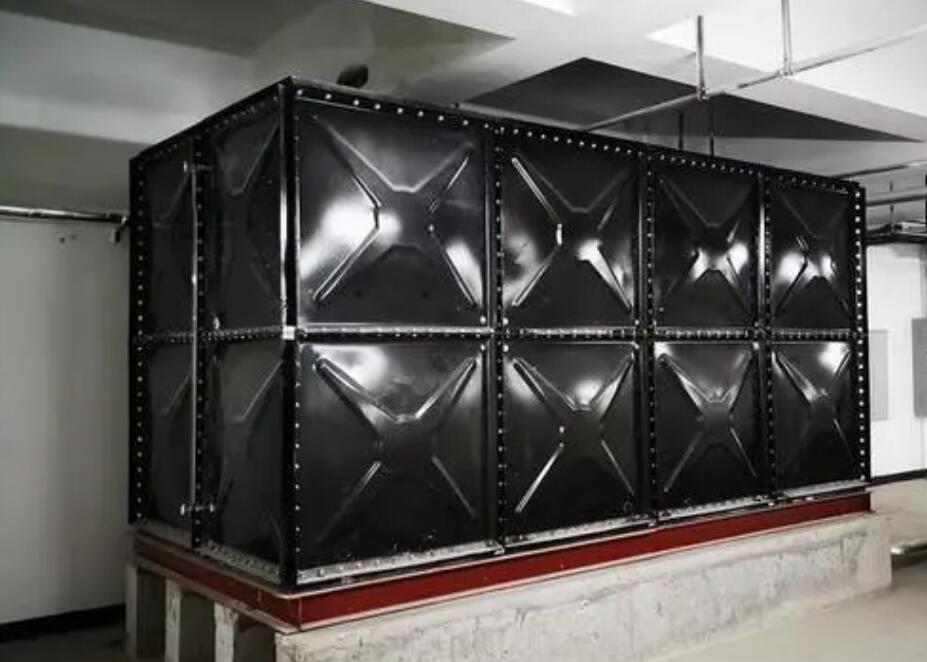
When selecting an FRP water tank, many buyers focus solely on color for aesthetic or branding reasons. However, color directly determines how much solar radiation the tank surface absorbs versus reflects, which in turn controls the photo-oxidation rate of the resin matrix. Beijing Yuanhui FRP Co., Ltd. has observed in post-installation tracking that dark-colored tanks show surface chalking and fiber exposure at significantly higher rates after 3–5 years of outdoor service compared to light-colored ones. This article breaks down the material science behind this phenomenon and provides actionable color selection and UV protection strategies.
1. How UV Radiation Damages FRP Water Tanks
1.1 Photodegradation Chain Reaction of Resin
The matrix material of FRP tanks—unsaturated polyester or vinyl ester resin—undergoes chain scission of ester bonds and C=C double bonds when exposed to UV light (290–400 nm). This generates free radicals that react with oxygen to form peroxides, further catalyzing degradation. Accelerated aging tests at Beijing Yuanhui's lab show that unprotected resin retains only 62% flexural strength after 1,000 hours of QUV exposure, while coated samples retain 91%.
1.2 Temperature Acceleration Effect
Color directly affects surface temperature. Dark colors (e.g., dark gray, navy, black) absorb more heat, reaching 70–80°C under summer sun—15–20°C higher than light colors. According to the Arrhenius equation, each 10°C rise doubles the chemical reaction rate. This means dark tanks degrade 2–3 times faster. Beijing Yuanhui's field data from Sanya, Hainan, confirms this: white tanks retained 78% gloss after 5 years, while dark gray tanks retained only 41%.
2. Scientific Principles of Color Selection
2.1 Balancing TSR and UV Absorption
Professional color selection should reference the Solar Reflectance Index (SRI) per ASTM E903. White and light coatings have SRI values of 80–100, while dark coatings score only 10–30. High SRI reflects more infrared and visible light, reducing thermal load. However, high reflectance does not guarantee full UV shielding. UV absorbers (e.g., benzotriazole compounds) must be added separately to the gel coat or topcoat. Beijing Yuanhui's standard dark tanks include 2% UV absorber in isophthalic gel coat, keeping UV transmittance below 0.5%.
2.2 Weatherability Ranking of Common Colors
Based on a 6-year outdoor exposure test (Beijing, 45° south-facing), the weatherability ranking (gloss retention ≥80% as pass) is:
White (5–6 years) > Light Gray (4–5) > Light Blue (3–4) > Medium Gray (2–3) > Dark Gray (1–2) > Dark Blue (1–2) > Black (0.5–1).
Note: Using UV-resistant vinyl ester gel coat extends each color's life by 40–60%.
2.3 Color Strategy for Extreme Conditions
In high-UV regions (e.g., Tibet, Xinjiang), white or light gray is mandatory, with gel coat thickness ≥0.5 mm. For clients requiring corporate colors, Beijing Yuanhui recommends a "light body + dark accent" approach: the tank body is white, with only side-painted logos or stripes in the brand color. This satisfies branding without sacrificing thermal performance.
3. Engineering Measures for UV Protection
3.1 Gel Coat: First Line of Defense
The gel coat is the primary UV barrier. Beijing Yuanhui uses NPG (neopentyl glycol) isophthalic gel coat, which offers 30% better weatherability than ordinary orthophthalic types. Gel coat thickness should be controlled at 0.4–0.6 mm—too thin risks micro-cracks from shrinkage, too thick increases brittleness. Additives like BYK-306 leveling agent prevent orange peel and ensure uniform coverage.
3.2 Topcoat: A Repairable Shield
For tanks already showing fading, Beijing Yuanhui recommends aliphatic polyurethane topcoat. This coating exhibits excellent UV resistance (8–10 years outdoor life), strong adhesion, and allows recoating. Surface preparation requires sanding to Ra ≥3.2 μm, followed by two coats totaling ≥80 μm dry film thickness. Field data shows topcoated surfaces run 5–8°C cooler, with UV transmittance below 0.1%.
3.3 Shading Structures: Passive Cooling
In extreme UV zones, install aluminum louvered sunshades above the tank. These reduce UV irradiance on the tank surface by 70–85% while maintaining ventilation. Beijing Yuanhui applied this solution in a Golmud, Qinghai project: surface temperature dropped from 72°C to 48°C, and gel coat aging rate decreased by 65%.
Conclusion
Color selection for FRP water tanks is directly tied to UV protection and service life. White and light gray are the safest choices; dark colors demand UV-resistant gel coats and topcoats. For each project, Beijing Yuanhui FRP Co., Ltd. provides customized color and protection schemes based on local UV index, ambient temperature, budget, and branding needs. Remember: the right color can buy your tank 3–5 more years of structural integrity.