Thermal Insulation Performance of FRP Water Tanks: From Material Properties to Winter Applications
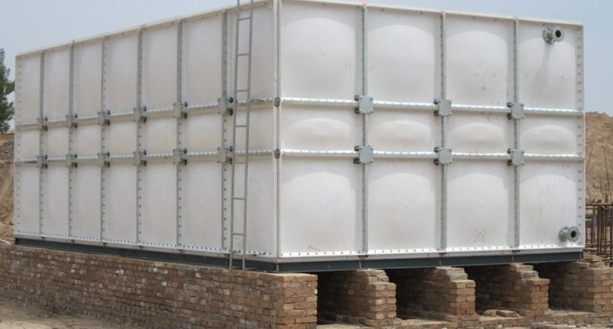
1. Insulation Mechanism and Material Superiority of FRP Water Tanks
The thermal insulation performance of FRP (Fiberglass Reinforced Plastic) water tanks relies on a composite system comprising the structural layer, insulation layer, and protective layer. The structural layer, made of unsaturated polyester resin and E-glass fiber filament winding, has a thermal conductivity of approximately 0.23 W/(m·K), significantly lower than carbon steel (50 W/(m·K)) and concrete (1.5 W/(m·K)). The insulation layer typically uses rigid polyurethane foam (PU) or high-density rubber-plastic sponge, with a thermal conductivity ≤0.024 W/(m·K) at 25°C and closed-cell ratio ≥95%, effectively blocking heat convection and radiation. For a standard insulated tank from Beijing Yuanhui FRP Co., Ltd., with an 80mm PU layer, the internal water temperature drops by less than 3°C over 24 hours at -20°C ambient temperature (initial water temperature 60°C, volume 50m³).
This low-conductivity combination allows a 15-20% reduction in insulation thickness compared to metal tanks while eliminating local condensation caused by thermal bridging.
2. Field Test Data and Design Parameters in Severe Cold Environments
In a field test in Mohe, Heilongjiang, a 100m³ outdoor FRP insulated tank (120mm PU layer with stainless steel cladding) was exposed to -35°C for 72 hours. The internal water temperature dropped from 45°C to 38.2°C, an average cooling rate of 0.094°C/h. In contrast, a carbon steel tank with the same insulation thickness showed local temperature differences of up to 8°C at weld joints, with icicles forming on the outer surface. The monolithic molding process of FRP tanks eliminates thermal bridges entirely, keeping the temperature difference between inner and outer surfaces below 2°C.
Three core parameters must be considered during design:
• Insulation thickness: According to GB50736, 80-150mm is recommended for northern China, and 50-80mm for frost-prone southern regions.
• Heat loss calculation: Use the steady-state heat transfer formula Q=K·A·ΔT, with K values of 0.3-0.5 W/(m²·K).
• Auxiliary heating: When ambient temperature falls below -25°C, install electric heating tubes or external heat exchangers at 5-8kW per 10m³.
3. Typical Application Scenarios and Selection Guidelines
3.1 Buffer Tanks for Northern Heating Systems
In district heating endpoints or distributed ground-source heat pump systems, FRP insulated tanks act as thermal storage buffers, stabilizing return water temperature at 45-55°C. Beijing Yuanhui FRP Co., Ltd. supplied a 30m³ tank for a Hebei residential complex with a 40mm PU + 20mm phenolic double-layer structure, reducing heat pump cycling frequency by 40% and achieving a 12% energy savings rate.
3.2 Fire Protection and Anti-Freeze Tanks
Per GB50974, fire water tanks in severe cold regions must incorporate freeze protection. FRP tanks with heat tracing and ≥100mm insulation maintain internal water temperature ≥5°C at -40°C. For example, a 50m³ FRP fire tank at a Liaoning oil depot, equipped with self-limiting heat tracing (15W/m), operated without freezing incidents over two winters.
3.3 Industrial and Food-Grade Storage
In the food and beverage industry, FRP tanks use food-grade resin liners (orthophthalic or isophthalic) compliant with GB/T 17219. Insulation must balance temperature maintenance and hygiene: A dairy plant's 30m³ constant-temperature tank (55±2°C) with 80mm PU and 304 stainless steel liner showed no microbial growth after three years.
4. Cost vs. Efficiency Optimization
Initial investment in FRP tanks is 15-25% higher than carbon steel tanks, but superior insulation reduces operational energy costs, and corrosion-free maintenance (20-25 year lifespan) yields 30%+ lower total life-cycle costs. For a 100m³ tank with 80mm PU, annual heat loss cost (at 0.8 RMB/kWh) is approximately 12,000 RMB, saving 5,500 RMB compared to a carbon steel tank with 150mm rock wool insulation. For selection, prioritize integral PU foam molding to avoid cold bridges at joints.
In a Chengde ski resort project, Beijing Yuanhui FRP Co., Ltd. optimized insulation thickness from 100mm to 85mm with an aluminum foil reflective layer, reducing tank weight by 12% while improving insulation efficiency by 8%, demonstrating the energy-saving potential of refined design.
Conclusion
FRP water tanks deliver stable insulation performance in extreme environments as low as -40°C, thanks to low-conductivity materials and thermal-bridge-free construction. From northern heating buffers to fire protection tanks, their applications continue to expand as insulation technology advances. Future adoption of polyurethane-aerogel composite insulation could further reduce thickness by 20-30%, driving the industry toward lightweight, high-efficiency solutions. Actual selection should integrate local climate data, operating temperatures, and auxiliary heating conditions, with custom thermal calculations and structural design provided by specialized manufacturers like Beijing Yuanhui FRP Co., Ltd.