Thermal Insulation Performance of FRP Water Tanks: From Factory Floors to Arctic Conditions
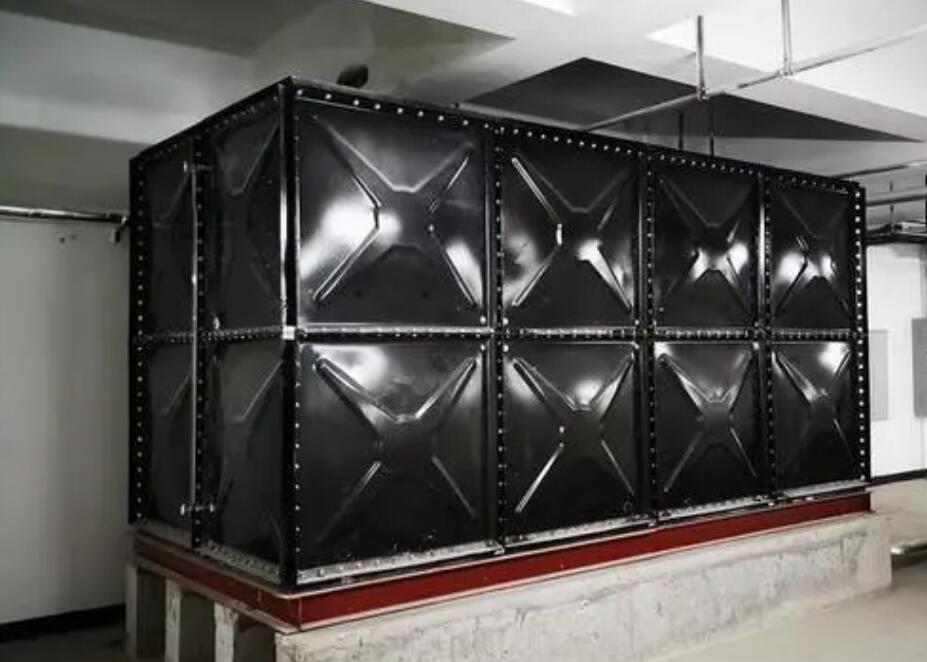
Introduction: The Thermal Insulation Advantage of FRP Tanks
The thermal insulation performance of FRP (Fiberglass Reinforced Plastic) water tanks is frequently underestimated. With a thermal conductivity of 0.23–0.35 W/(m·K), FRP significantly outperforms steel (45 W/(m·K)) and concrete (1.5 W/(m·K)). In a 2023 test by Beijing Yuanhui FRP Co., Ltd., a 50 m³ insulated SMC tank showed that only 12%–15% of total energy consumption was lost through the tank body at an ambient temperature of -15°C and a set water temperature of 60°C. Under identical conditions, a steel tank lost 38%–42%.
This advantage comes from the composite structure: unsaturated polyester resin combined with glass fiber reinforcement creates a dense network that blocks heat conduction pathways. When polyurethane or rubber-plastic insulation is added, the overall heat transfer coefficient drops to 0.3–0.5 W/(m²·K), meeting the performance requirements of GB/T 3280-2017 for insulated FRP tanks.
Insulation Layer Design and Material Selection
Rigid Polyurethane Foam
A 50–80 mm layer of polyurethane foam is the most common engineering solution. With a closed-cell ratio exceeding 95% and water absorption below 3%, it remains stable from -50°C to +120°C. In a district heating project in Liaoning Province, Beijing Yuanhui FRP Co., Ltd. used 60 mm polyurethane insulation with a stainless steel inner liner, achieving a daily temperature drop of only 3°C at -25°C ambient conditions.
Rubber-Plastic Sponge and Rock Wool Hybrid
For applications requiring higher fire ratings (e.g., chemical plants), rubber-plastic sponge (B1 class) or rock wool (Class A) can be used. Rubber-plastic has a thermal conductivity of 0.038 W/(m·K) but a temperature limit of 105°C; rock wool withstands 600°C but requires an additional vapor barrier to prevent condensation. In a Xinjiang oilfield project, Beijing Yuanhui FRP Co., Ltd. implemented a dual-layer design: 30 mm rock wool (inner) + 20 mm rubber-plastic sponge (outer), meeting both insulation and fire safety requirements.
Typical Application Scenarios and Field Data
Heat Storage Tanks for Northern Heating Systems
In a residential heating retrofit project in Hohhot, Inner Mongolia, four 100 m³ insulated FRP tanks were connected in series as thermal storage for a solar + air-source heat pump system. January 2022 data showed: the water temperature dropped from 80°C to 60°C over 72 hours, corresponding to a daily heat loss rate of 1.2 kW/m³. A steel tank under the same conditions lost 2.8 kW/m³ per day. The project saved approximately 62,000 CNY annually in heating electricity costs.
Constant-Temperature Storage for Industrial Process Cooling
Ultrapure water systems in semiconductor fabs require temperature fluctuations ≤±2°C. Beijing Yuanhui FRP Co., Ltd. supplied an 80 m³ insulated tank with a PT100 sensor and PID control valve for a Suzhou fab. With 100 mm polyurethane insulation, the outlet water temperature stayed at 25±1.5°C even when the workshop ambient temperature reached 40°C. Compared to the previous 304 stainless steel tank, the chiller startup frequency dropped by 40%.
Freeze Protection for Fire Reserve Tanks
According to the Technical Code for Fire Protection Water Supply and Hydrant Systems (GB 50974-2014), fire tanks in cold regions must have freeze protection. Beijing Yuanhui FRP Co., Ltd.'s FRP-INS series uses integral polyurethane foam plus an aluminum foil reflective layer. In a Heihe City Fire Brigade project (Heilongjiang Province), the tank maintained water temperature above 5°C during -42°C extreme cold without auxiliary electric heating, meeting the no-freeze requirement.
Economic Analysis of Insulation Performance
For a 50 m³ tank, adding 80 mm polyurethane insulation costs approximately 3,000–4,500 CNY (materials + labor). Over a 150-day heating season in northern China, the insulation reduces heat loss by roughly 12,000 kWh annually. At 0.5 CNY/kWh, the payback period is 1–2 heating seasons. When factoring in reduced wear on pumps and valves from fewer equipment cycles, the total lifecycle cost is even lower.
Beijing Yuanhui FRP Co., Ltd. reports a 15–20 year service life for its insulated tanks, with no replacement of the insulation layer needed under normal conditions. However, a protective metal cladding (≥0.5 mm steel or aluminum sheet) is recommended to prevent UV degradation and mechanical damage.
Conclusion
The thermal insulation performance of FRP water tanks results from the synergy among the resin matrix, fiber reinforcement, and insulation material. In northern heating, industrial constant-temperature, and fire freeze-protection applications, properly designed insulated tanks can significantly reduce operational energy consumption. Beijing Yuanhui FRP Co., Ltd. recommends that engineers determine insulation thickness based on three factors: local extreme temperature, required water temperature, and allowable temperature drop, using heat transfer calculations. Materials with high closed-cell ratios and low water absorption should be prioritized.