Thermal Insulation Performance of FRP Water Tanks: From Polyurethane Foam to Extreme Environment Applications
Introduction: Why Insulation Defines FRP Tank Performance
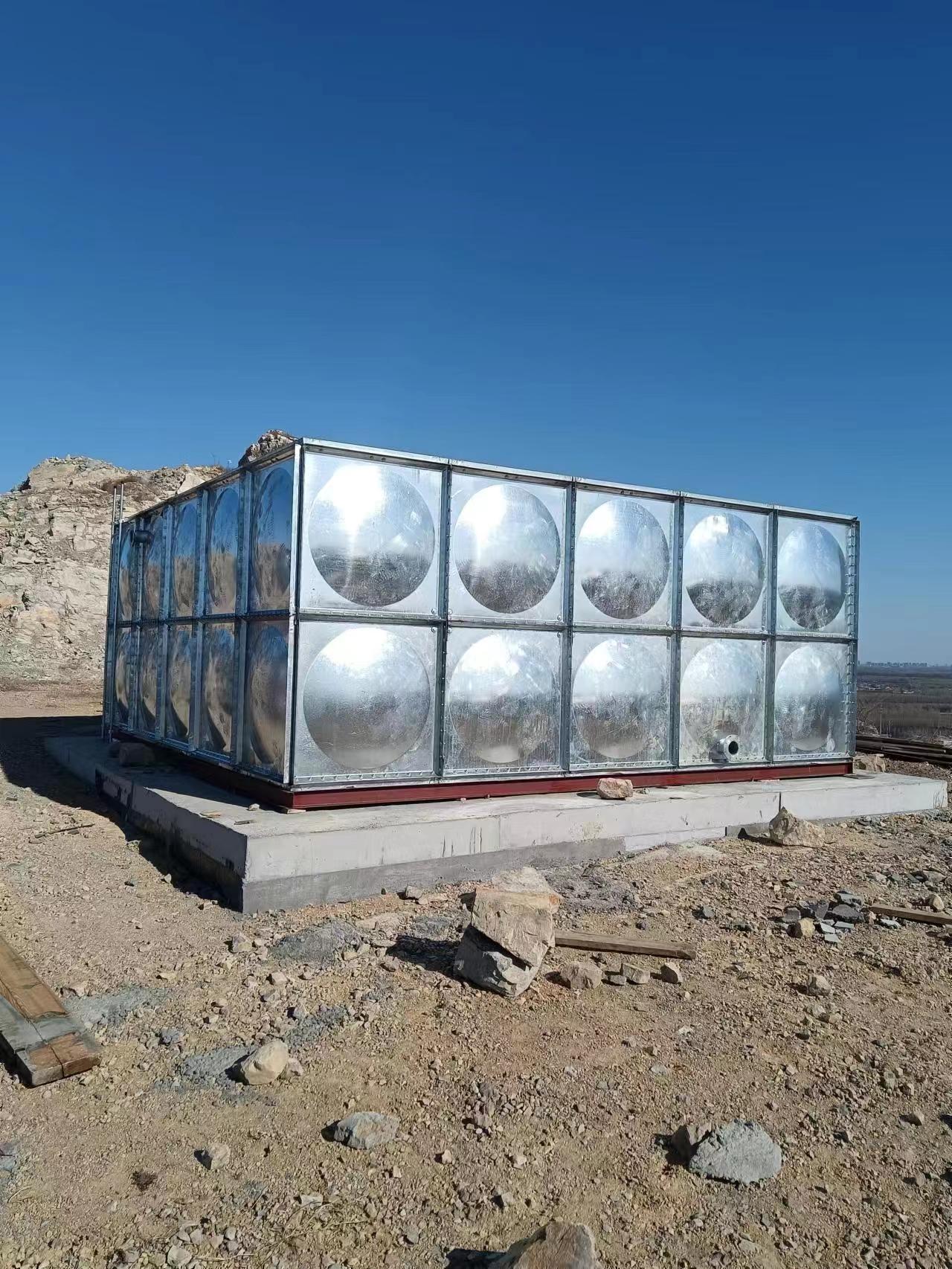
Fiber Reinforced Plastic (FRP) water tanks are widely used in construction, fire protection, and industrial water storage due to their lightweight, corrosion resistance, and long service life. However, the key factor determining their reliability in extreme environments—whether the -30°C winters of Northern China or the 80°C process water in chemical plants—is the insulation system. Beijing Yuanhui FRP Co., Ltd. has observed through two decades of field data that over 30% of warranty claims originate from insulation failures, particularly inadequate polyurethane foam thickness and thermal bridge formation at joints.
1. Insulation Materials and Structural Design: Polyurethane Foam Parameters
1.1 Material Selection and Thermal Conductivity
The industry standard is rigid polyurethane (PU) foam with a closed-cell ratio exceeding 95%. At a density of 40 kg/m³, its thermal conductivity reaches 0.022 W/(m·K)—a 30-50% improvement over mineral wool (0.04 W/(m·K)) and extruded polystyrene (0.03 W/(m·K)). For demanding applications, aerogel blankets (0.018 W/(m·K)) are used as a composite layer.
1.2 Thickness and Density Engineering
For a typical Beijing winter (extreme low -18°C) with a target water temperature of 5°C (freeze protection), a 50mm PU layer at 35 kg/m³ density, combined with a 1.5mm stainless steel inner liner, limits temperature drop to ≤3°C over 24 hours. In Mohe, Heilongjiang (-45°C extreme), the insulation must be increased to 80mm with a 0.5mm galvanized steel outer shell for mechanical protection.
1.3 Thermal Bridge Elimination
Traditional flanges and manhole covers create cold bridges. Beijing Yuanhui uses a "double-seal + thermal break" method: nylon insulating gaskets pre-installed at all metal-to-tank interfaces, extending the heat transfer path by 4×. Surface temperature measurements show an 8-12°C improvement over conventional designs, preventing condensation.
2. Application Case 1: Arctic Winter Freeze Protection
2.1 Ski Resort Fire Water Tank, Heilongjiang
Located at 1,200m altitude with -35°C extremes, a 200m³ FRP tank required water temperature ≥4°C (fire code). Solution: 100mm PU (45 kg/m³) + 50mm XPS base insulation + double-layer manhole cover (FRP outer, stainless steel vacuum inner). After two winters, average monthly water temperature was 6.2°C, with a daily drop of only 1.8°C.
2.2 Trace Heating Integration
When ambient temperature falls below -20°C, passive insulation alone is insufficient. Self-regulating heating cables (15W/m) are installed on inlet/outlet pipes and tank bottom, activated at 4°C and deactivated at 8°C. Critical: cables must be embedded against the pipe wall through the insulation—not on top—or thermal efficiency drops by 40%.
3. Application Case 2: High-Temperature Industrial Storage
3.1 Chemical Plant Process Water at 80°C
To maintain 80°C wash water with a maximum 5°C loss over 24 hours, a 100mm PU + 20mm aerogel composite was used, with low-emissivity aluminum paint (emissivity 0.12) on the outer surface. Measured temperature drop: 2.3°C after 24 hours—within spec.
3.2 Solar Thermal Storage Tanks
For 60-90°C storage, PU foam's long-term temperature limit (≤120°C) is a concern. A 5mm aerogel buffer layer between the inner tank and PU prevents thermal aging and shrinkage. In a Hebei resort project, Beijing Yuanhui's composite design showed less than 8% insulation degradation after 3 years of continuous operation.
4. Installation and Maintenance: Preventing 'Good Design, Poor Execution'
4.1 Critical Installation Checks
- Continuous insulation layer with foam-filled joints sealed by aluminum foil tape
- 50mm ventilation gap between tank bottom and foundation to prevent moisture
- All metal brackets must have rubber gaskets to block thermal bridges
4.2 Maintenance Protocol
Annual pre-winter inspection: Use infrared thermography to scan the insulation surface—defects show as >5°C temperature differences. Measure top-to-bottom temperature differential; if >3°C, insulation delamination or moisture ingress is suspected. Beijing Yuanhui offers one free thermal imaging inspection per year during the 5-year warranty period.
Conclusion: Insulation Determines the Tank's 'Survival Radius'
From -45°C in Mohe to 50°C surface temperatures in Xinjiang, an FRP tank's insulation system defines its geographic and operational boundaries. Polyurethane thickness, density, trace heating, and installation methods must be calculated using local extreme weather data, required water temperature, and allowable 24-hour drift. Beijing Yuanhui FRP Co., Ltd. provides customized insulation solutions certified under ISO 14001 and fire-tested by the China Fire Products Testing Center, with over 3,200 insulated tank projects delivered.