Complete Guide to FRP Water Tank Manufacturing: From Raw Materials to Finished Product
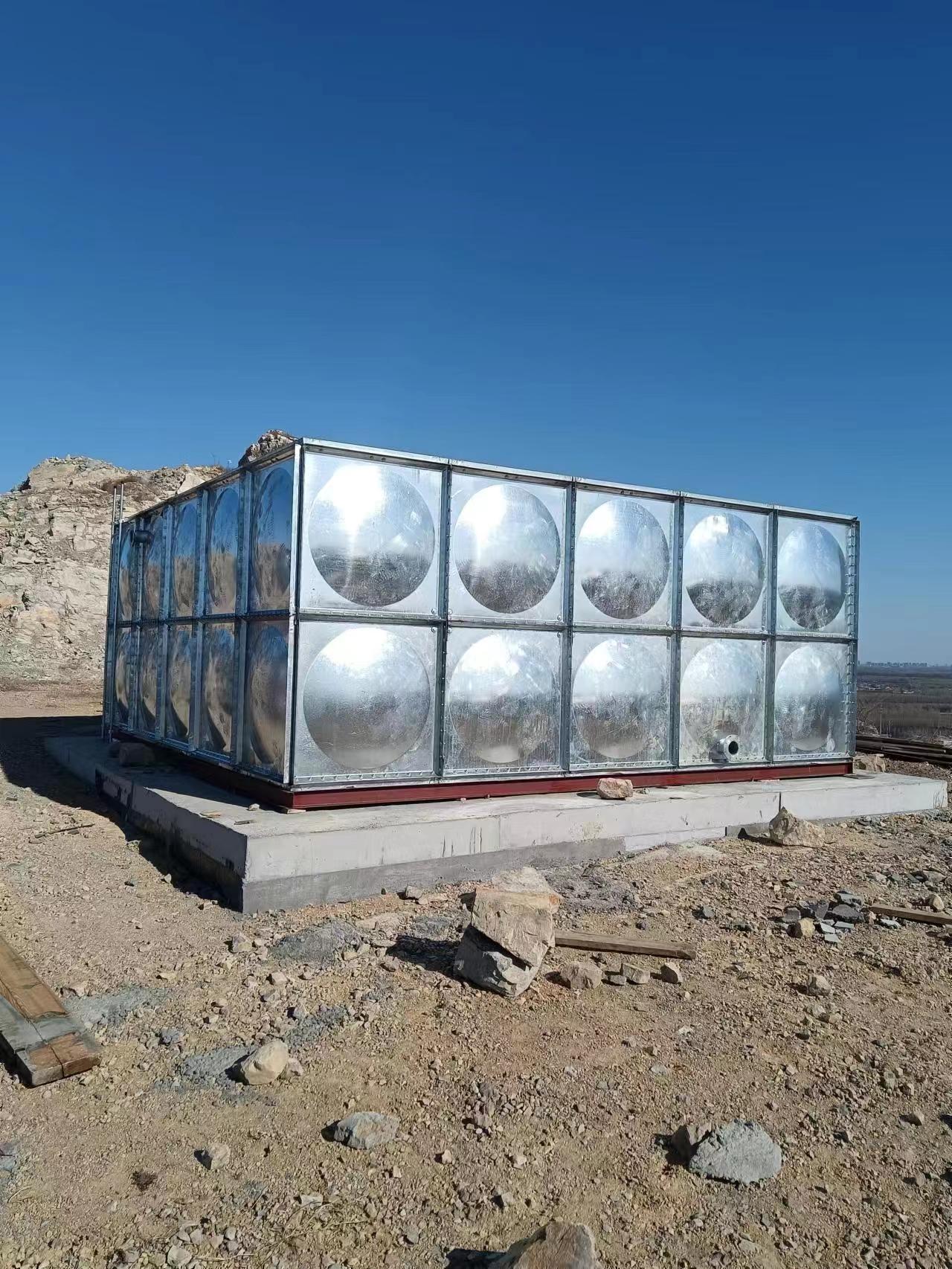
Introduction
Fiberglass Reinforced Plastic (FRP) water tanks are widely used in construction, municipal, and industrial sectors due to their light weight, high strength, corrosion resistance, and long service life. In 2023, the Chinese FRP water tank market reached approximately CNY 4.5 billion, with an annual growth rate of around 8%. Beijing Yuanhui FRP Co., Ltd., a veteran manufacturer with over 15 years of experience, supplies products to hospitals, schools, and high-rise residential projects. This article details their production process from raw materials to finished goods.
1. Raw Material Selection and Mix Ratio Control
1.1 Resin and Reinforcement Choices
Key raw materials include unsaturated polyester resin (UPR), chopped strand mat (CSM), woven roving, and auxiliary agents (catalyst, accelerator, pigment). Beijing Yuanhui uses food-grade 196# UPR with a styrene content of 35%±2%, ensuring compliance with drinking water safety standard GB/T 17219. E-glass fibers (2400 tex, tensile strength ≥2500 MPa) are selected for reinforcement.
1.2 Mix Ratio and Quality Control
The typical resin-to-catalyst ratio is 100:1.5-2.0 (by weight), with accelerator at 0.5-1.0% of resin weight. Gel time is controlled at 20-30 minutes at 25°C, and shortened to 10-15 minutes at 35°C. Viscosity is tested at 300-500 mPa·s (25°C). In 2023, Beijing Yuanhui achieved a raw material batch pass rate of 99.2%, exceeding the industry average of 97.5%.
2. Mold Preparation and Surface Treatment
2.1 Mold Design and Material
Beijing Yuanhui uses custom steel molds with surface roughness Ra ≤0.4 μm and dimensional tolerance ±0.5 mm. Mold lifespan is 500-800 cycles before refurbishment.
2.2 Release Agent Application
After acetone cleaning, a semi-permanent release agent (e.g., Henkel Frekote 770NC) is applied in three coats: first thin coat (10 min flash), second cross-coat (15 min), third vertical coat (20 min). Each coat thickness is 5-10 μm, total ≤30 μm. Drying at 40°C for 30 minutes follows.
3. Hand Lay-Up Process Details
3.1 Layering Sequence and Resin Impregnation
The standard stack is: surface mat (50 g/m²) → CSM (300 g/m²) → woven roving (800 g/m²) → CSM (300 g/m²) → surface mat (50 g/m²). Total thickness is 3-5 mm (4-6 layers). Resin-to-glass ratio is 2.2-2.5:1. Operators must have ≥3 years of experience and complete each square meter within 8 minutes.
3.2 Bubble Removal and Compaction
After each layer, a metal or silicone roller applies 5-10 kg pressure from center to edge (3-4 passes). Bubbles >2 mm are punctured and filled. In Q1 2024, Beijing Yuanhui's bubble defect rate was only 0.3% (by area), well below the 2% industry standard.
4. Curing and Demolding
4.1 Curing Conditions and Cycle
After lay-up, parts cure at room temperature for 24 hours (25±2°C). Beijing Yuanhui uses a staged cycle: 8 hours at ambient, then 16 hours post-cure at 45°C. Post-curing increases HDT by 15-20°C (to ≥85°C) and flexural strength by 12% (≥320 MPa).
4.2 Demolding Procedure
Before demolding, Barcol hardness must be ≥45. Pneumatic pry bars apply even force from mold edges. After demolding, parts are stored at 25±2°C and ≤60% RH for 48 hours to relieve internal stress. Shrinkage is controlled at 0.1-0.3%.
5. Assembly and Quality Inspection
5.1 Panel Joining and Sealing
Panels are joined with stainless steel bolts (M10-M12, 304 grade) at 200-250 mm spacing, using EPDM gaskets (5 mm thick, 30-40% compression). A dual-seal system (inner silicone sealant + outer gasket) is employed. In a 2023 hospital project (300 m³ tank), a 24-hour hydrostatic test showed zero leakage.
5.2 Factory Testing Standards
Each batch undergoes: 1) dimensional check (tolerance ±3 mm per GB/T 8237); 2) Barcol hardness ≥40; 3) hydrostatic test at 1.5× working pressure (30 min); 4) heavy metal leaching test (lead ≤5 μg/L, cadmium ≤1 μg/L per GB/T 17219). In 2023, Beijing Yuanhui achieved a first-pass yield of 98.6%, above the industry average of 95%.
Conclusion
FRP water tank manufacturing requires precise control over raw materials, mold preparation, hand lay-up, curing, demolding, and assembly. Beijing Yuanhui FRP Co., Ltd. ensures high reliability and consistency through optimized ratios, strict temperature/time control, and multi-layer quality inspection. For project buyers, selecting a manufacturer with mature processes and complete testing capabilities is key to ensuring long-term tank performance.