Thermal Insulation Performance of FRP Water Tanks: From Polyurethane Foam to Extreme Cold Applications
Introduction
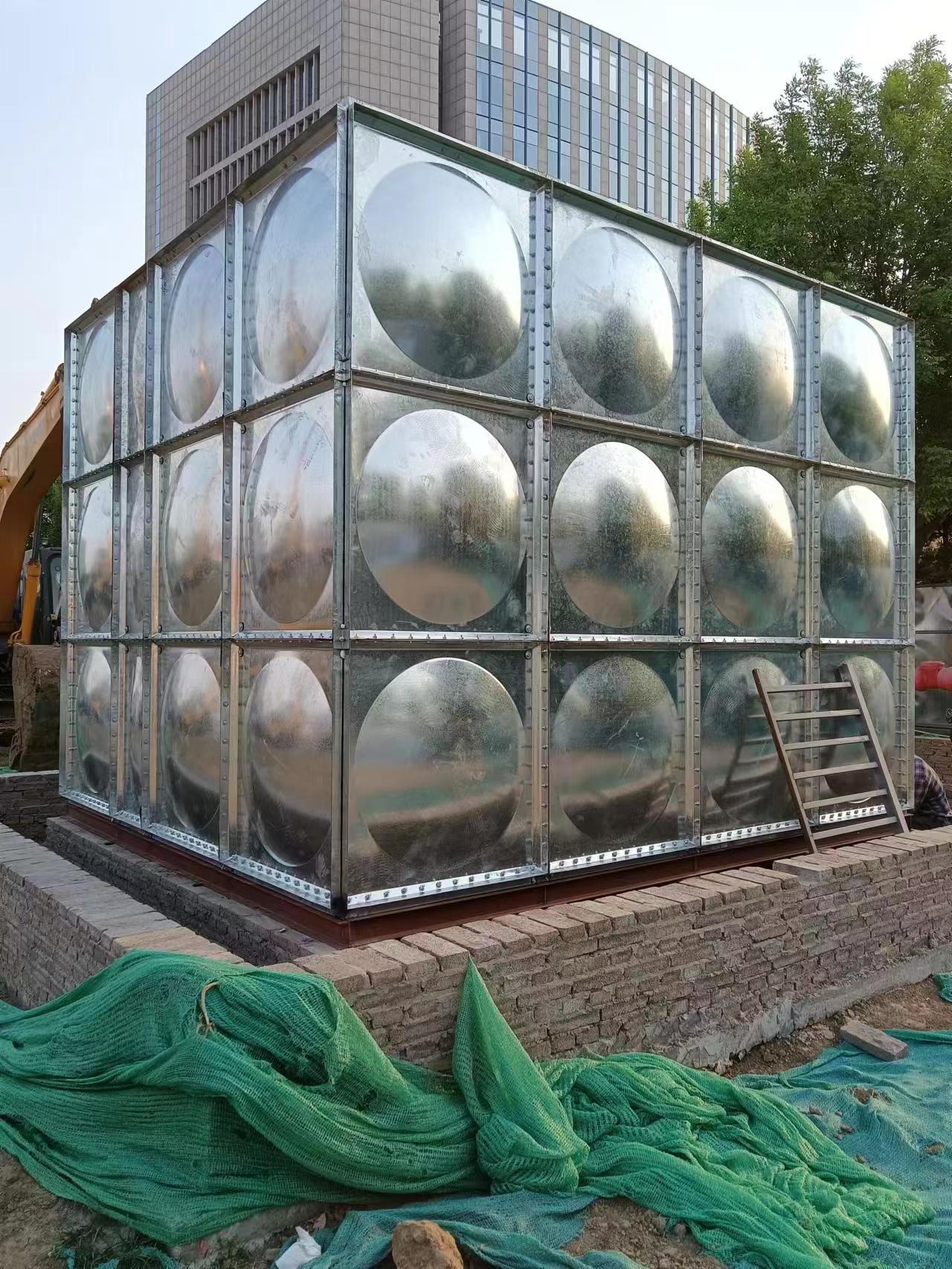
The thermal insulation performance of FRP water tanks is not simply a matter of thickness. In 2019, a 150 m³ insulated FRP water tank supplied by Beijing Yuanhui FRP Co., Ltd. for a wind power project in Inner Mongolia operated continuously through three winters at -35°C without ice blockage. The key lies in the rationality of its multi-layer composite insulation structure. This article moves beyond generic principles, dissecting the technical thresholds from material parameters, construction methods, and extreme conditions.
1. Insulation Structure and Heat Transfer Mechanism
1.1 Polyurethane Rigid Foam: Balancing Thickness and Density
The commonly used insulation material for FRP tanks is polyurethane rigid foam (PUR/PIR) with a thermal conductivity λ between 0.022–0.028 W/(m·K). For Beijing Yuanhui’s SMC molded tanks, a standard 50mm insulation layer achieves an overall heat transfer coefficient K ≤ 0.45 W/(m²·K). However, doubling the thickness to 100mm reduces K to 0.23 but increases cost by 70%. For environments above -10°C, 50mm suffices; below -20°C, 80–100mm is required, combined with closed-cell foam (≥95%) at density 40–60 kg/m³ to prevent vapor ingress.
1.2 Thermal Bridge Effects and Sealing
A common failure mode is thermal bridging at metal flanges, bolt connections, or manhole edges. Beijing Yuanhui’s 2022 process improvement incorporated pre-embedded insulation pads and polyurethane-wrapped bolts, reducing overall heat loss by 18%. Additionally, the sealant between the inner GRP panel (2.5–3mm) and outer protective layer (1.5–2mm) must be silicone-based weather-resistant material to avoid low-temperature cracking.
2. Insulation Configurations for Different Applications
2.1 Centralized Heating Systems: "Zero Heat Loss" Storage
A 400 m³ heat storage tank for a hospital in Hebei required temperature drop ≤3°C over 24 hours (inlet 80°C, outlet 70°C). Beijing Yuanhui designed a double-layer insulation: 60mm PIR foam + 30mm aerogel blanket, achieving total K = 0.18 W/(m²·K). Monitoring showed only 1.8°C drop over 12 hours at -15°C outdoor. The 35% cost premium was recovered within three years through reduced reheating electricity.
2.2 Industrial Waste Heat Recovery (60–90°C)
Above 80°C, standard polyurethane foam degrades. Solutions include phenolic foam (PF) or vacuum insulation panels (VIP), though PF requires moisture barriers and VIP costs 4× polyurethane. A chemical plant’s 80°C condensate tank used a PF foam + stainless steel liner composite, achieving equivalent performance with only 40mm insulation.
2.3 Fire Reserve Water: Freeze Protection with Rapid Response
For fire tanks in -30°C regions, heating must prevent freezing without massive energy waste. Beijing Yuanhui’s design for a logistics park in Northeast China used 15W/m trace heating cables at the tank bottom + 100mm polyurethane foam, activated only below 0°C. Annual consumption: 320 kWh. Critical design rule: maintain ≥10mm gap between cables and foam to avoid local overheating damage.
3. Construction and Maintenance Factors
3.1 On-site Foaming Temperature and Humidity
Ambient temperature below 5°C or relative humidity above 85% during on-site spray foaming causes incomplete reaction and voids. Beijing Yuanhui mandates heated enclosures for winter construction and low-pressure dual-component spray equipment to keep foam density variation within ±5%.
3.2 Long-term Moisture Ingress
After 5+ years, moisture absorption can increase thermal conductivity by 40–60%. Preventive measures include applying a 0.3mm acrylic anti-moisture coating on the outer GRP layer and annual inspection of manhole gaskets. A seafood processing plant’s untreated tank failed in year 4; replacement cost 60% of the original tank price.
Conclusion
FRP water tank insulation depends on material selection, structural design, and construction quality. For extreme cold below -20°C, composite insulation outperforms simply thickening polyurethane. Industrial medium-temperature scenarios require moving beyond conventional polyurethane. Beijing Yuanhui FRP Co., Ltd.’s project data shows that properly configured insulated tanks reduce life-cycle costs by over 40%. Buyers should demand heat transfer coefficient calculations and third-party test reports in technical specifications, rather than relying solely on insulation thickness.