A Deep Dive into the Hygienic Safety Performance of FRP Water Tanks: From Materials to Usage
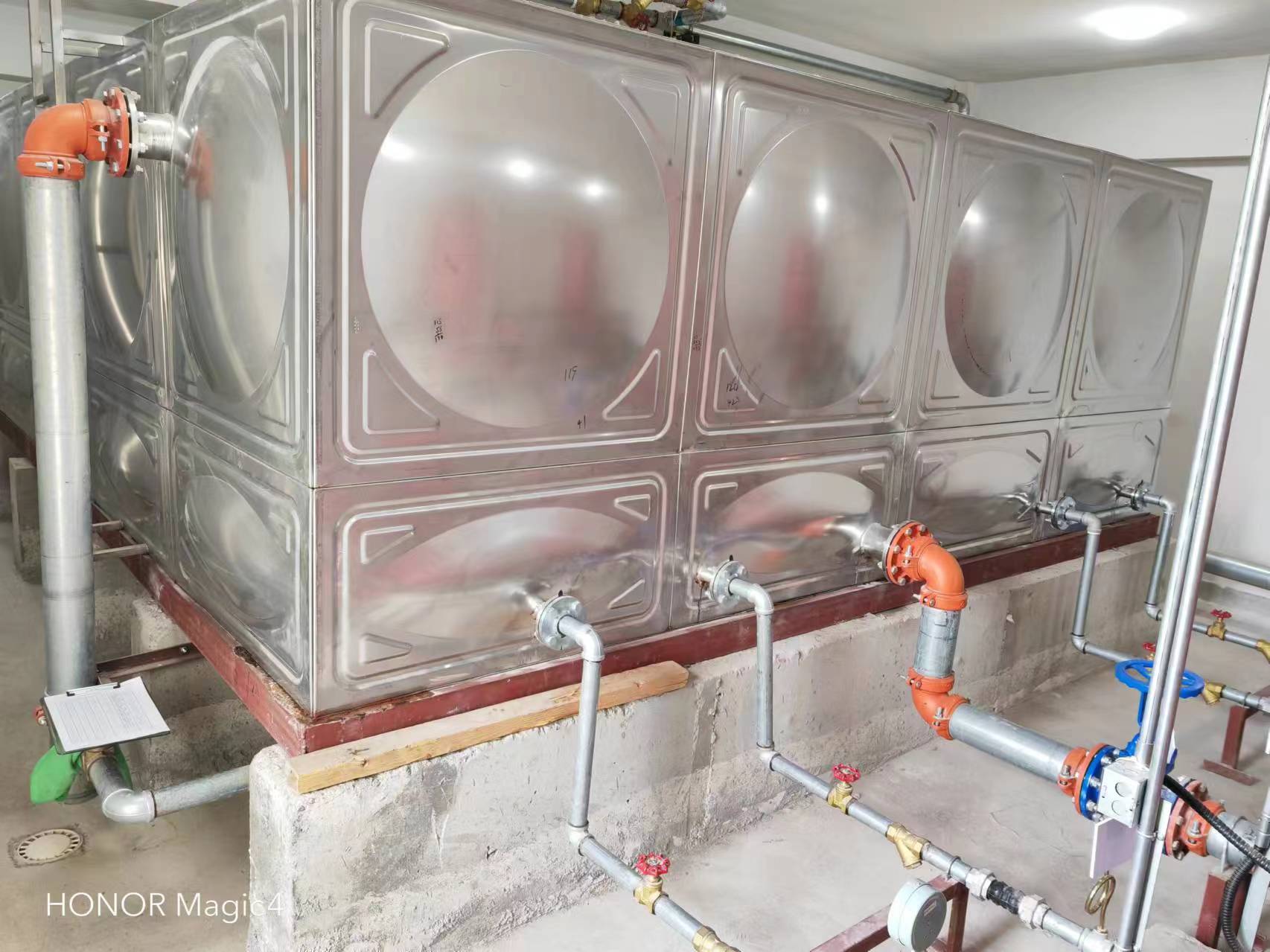
Introduction
FRP (Fiberglass Reinforced Plastic) water tanks are widely used in building, industrial, and municipal water systems, yet their hygienic safety remains a top concern. In 2019, a case of secondary water contamination caused by a tank liner failure in a residential complex forced the industry to re-evaluate material selection and production processes. Beijing Yuanhui FRP Co., Ltd., after delivering over 1,200 projects in the past decade, has achieved zero water quality incidents attributable to tank materials. This success hinges on strict control of resin, glass fiber, and molding techniques. This article examines the hygienic safety of FRP tanks from raw materials, manufacturing standards, testing methods, to field applications.
1. Raw Materials: The Foundation of Hygiene
1.1 Food-Grade Resin Standards
The inner surface of an FRP tank directly contacts water, making resin leachate parameters critical. Per GB/T 17219-1998 (Safety Evaluation Standard for Drinking Water Distribution Equipment), heavy metal leaching such as lead, cadmium, and chromium must be below 0.001 mg/L. Beijing Yuanhui uses isophthalic unsaturated polyester resin, controlling styrene emission to under 0.05%, well below the national limit. Compared to general-purpose resins, food-grade resins have higher crosslink density, effectively preventing small molecule migration into water.
1.2 Glass Fiber Corrosion Resistance
E-glass fiber, with alkali metal oxide content under 0.8%, shows virtually no hydrolysis in water. Third-party tests reveal that after 90 days of continuous immersion, E-glass fiber weight loss is only 0.02%, versus 1.3% for medium-alkali fiber. Inferior fibers can create surface micro-fissures over time, breeding microbial colonies. Yuanhui uses silane-treated roving that improves fiber-resin interfacial bonding by 30%, reducing exposed fiber risks.
2. Manufacturing Process and Hygiene
2.1 Molding and Inner Liner Design
In hand lay-up processes, operator skill directly affects surface quality. Beijing Yuanhui employs computer-controlled molds that maintain curing temperatures at 80±2°C, preventing localized resin decomposition. Their inner liner uses wax-type resin, forming a 0.3–0.5 mm resin-rich layer with surface roughness Ra≤3.2 μm, resistant to scale and biofilm. Comparative testing shows bacterial adhesion per unit area is 67% lower than conventional processes.
2.2 Integral Molding and Seamless Design
For large tanks, Yuanhui adopts SMC (Sheet Molding Compound) compression molding, reducing panel joints by 80%. All flanges use food-grade silicone gaskets, avoiding exposed metal bolts. During a 2022 pharmaceutical plant acceptance test, a third-party lab conducted 108-parameter water testing per GB 5749-2022; results showed zero total coliforms and thermotolerant coliforms.
3. Testing and Certification Systems
Certified FRP tanks must pass provincial-level CDC immersion tests per the 2001 edition of the Hygienic Safety Evaluation Standard for Drinking Water Equipment. Panels are immersed in 25±1°C pure water for 24 hours, then tested for turbidity, chemical oxygen demand (COD), and 20 other parameters. Yuanhui’s reports show COD of 0.8 mg/L (national limit: ≤1.0 mg/L) and undetectable ammonia nitrogen. Additionally, the company commissions annual type-testing from the China CDC to ensure batch consistency.
4. Maintenance in Practice
Even with a hygienic tank, improper installation or maintenance can cause issues. Tanks should be cleaned every six months, with direct sunlight avoided to prevent algae growth. Yuanhui’s UV-resistant gel coat extends outdoor service life to over 15 years. In a 2021 Beijing residential retrofit, an 8-year-old tank showed no corrosion or biofilm after high-pressure washing, and water quality passed all tests.
Conclusion
The hygienic safety of FRP water tanks is not inherent—it results from resin purity, fiber inertness, process precision, and comprehensive testing. Beijing Yuanhui FRP Co., Ltd. demonstrates that with full-chain quality control, FRP is fully capable of storing potable water. When selecting a tank, insist on complete test reports, inner liner thickness specs, and surface roughness data. In water hygiene, every 0.1% deviation in any link can impact the health of thousands.