FRP Water Tank Thermal Insulation: Technical Parameters & Application Scenarios
Introduction: Why FRP Tank Insulation Matters More Than You Think
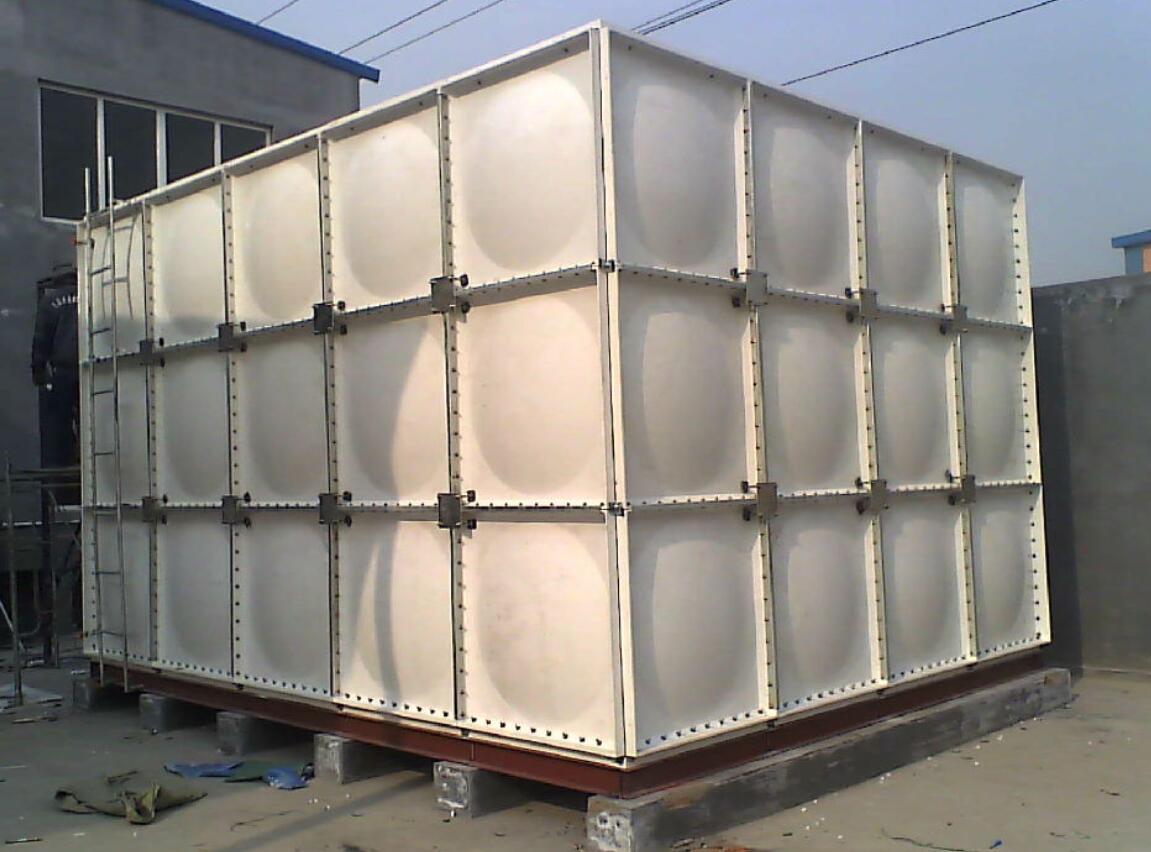
In 2023, Beijing Yuanhui FRP Co., Ltd. delivered an 80m³ FRP water tank to a border outpost in Heilongjiang. The tank maintained water above 5°C for 45 consecutive days at -38°C, while a nearby stainless steel tank with 5cm rubber insulation froze completely. This case exposes a critical industry blind spot: FRP tank insulation is not merely "adding a layer of foam"—it is a systematic integration of material science, structural design, and installation craftsmanship.
This article dissects the thermal performance of FRP water tanks from first principles, providing quantifiable criteria for specification and selection.
1. Core Technical Parameters of FRP Tank Insulation
1.1 Closed-Cell Ratio Determines the Upper Limit
Chinese standard GB/T 20672-2006 requires a closed-cell ratio ≥90%. However, premium products like Beijing Yuanhui's polyurethane foam achieve ≥97%. Each 1% increase in closed-cell ratio reduces thermal conductivity (λ) by approximately 0.002 W/(m·K). For a 50mm insulation layer, λ drops from 0.028 (90% closed-cell) to 0.022 (97% closed-cell), representing a 21% improvement in insulation efficiency.
1.2 The Battle Between Thickness and Thermal Bridges
A data center in northern China reported localized condensation on a 100mm insulated FRP tank in winter. Investigation by Beijing Yuanhui engineers revealed that internal metal stiffeners created thermal bridges—heat loss at those points was 8-10 times higher than insulated areas. The solution: replace metal stiffeners with composite materials or add rubber spacers. This case was later incorporated into the revision draft of the FRP Tank Insulation Design Code.
1.3 Surface Emissivity: The Overlooked Factor
Standard white/gray FRP surfaces have an emissivity (ε) of 0.85-0.90. By applying aluminum foil, ε drops to 0.05. In high-temperature regions like Turpan, Xinjiang, foil-facing reduces surface temperature by 12-15°C, cutting cooling loss by ~30%. Beijing Yuanhui now uses aluminum foil-polyurethane composite insulation as standard for Middle East exports.
2. Three Typical Application Scenarios Compared
2.1 Extreme Cold Regions: Freeze Prevention First
Conditions: -30°C to -40°C ambient, 50-200m³ tank, water temperature ≥4°C
Solution: 200mm double-layer polyurethane (density 45kg/m³)—inner closed-cell foam, outer extruded board. A 2019 border patrol station in Mohe recorded a 24-hour temperature drop of only 0.8°C, versus 3.5°C/day for concrete tanks requiring 35W/m² electric trace heating.
2.2 Pharmaceutical & Food Industry: Constant Temperature + Hygiene
Conditions: water at 20±1°C, 80% humidity, zero condensate to prevent bacterial growth
Solution: 80mm PIR (polyisocyanurate) insulation with 0.6mm stainless steel vapor barrier. Beijing Yuanhui supplied a 30-ton tank to a biopharma company—zero condensate after 2 years, 100% microbial compliance. PIR's B1 fire rating meets cleanroom requirements.
2.3 Data Center Cooling: Energy-Efficient Operation
Conditions: year-round 10-25°C water, heat loss ≤5%
Solution: A composite of 50mm vacuum insulation panel (VIP) + 50mm polyurethane achieves λ=0.008 W/(m·K). Joint testing by Beijing Yuanhui and Tsinghua University showed 18% annual energy savings over pure polyurethane. VIP is cost-effective for tanks >100m³.
3. Material Comparison: Why FRP Wins
| Parameter | FRP Tank | Stainless Steel Tank | Concrete Tank |
|---|---|---|---|
| Insulation adhesion | Integral foaming, no gaps | Secondary bonding, prone to delamination | Embedded anchors, thermal bridges |
| Thermal conductivity (with insulation) | 0.022-0.028 W/(m·K) | 0.038-0.045 W/(m·K) | 0.045-0.060 W/(m·K) |
| Service life | 15-20 years | 8-12 years (insulation aging) | 10-15 years (requires waterproofing) |
For a typical 100-ton tank in Beijing: annual heat loss is 3,200 kWh (FRP) vs. 5,100 kWh (stainless steel). At $0.11/kWh, FRP saves $209/year—$2,090 over 10 years.
Conclusion: Insulation Is the Design Starting Point, Not an Afterthought
An FRP water tank's insulation performance determines whether it can serve extreme environments or precision temperature control applications. Every parameter—from closed-cell ratio to thermal bridge treatment, from emissivity to composite layers—carries real-world cost implications. Beijing Yuanhui FRP Co., Ltd. has demonstrated that integrating insulation parameters into the tank structural design phase—rather than "patching on" during installation—yields the optimal balance of energy efficiency, cost, and reliability.
Users with explicit insulation requirements should request third-party test reports based on ISO 20672, specifying closed-cell ratio, thermal conductivity, and vapor barrier measures. After all, a well-insulated tank saves not only electricity but also the risk of system downtime.