Thermal Insulation Performance of FRP Water Tanks: Material Structure and Application Scenarios
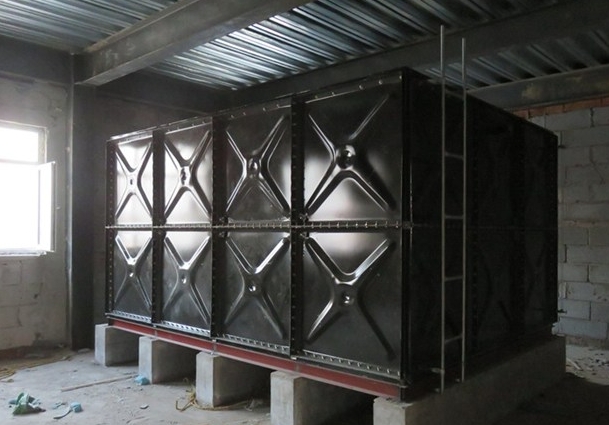
1. Thermal Insulation Mechanism: Synergy of Material and Structure
The thermal insulation performance of FRP water tanks depends on the composite material properties, insulation layer design, and sealing integrity. FRP itself has a thermal conductivity of 0.23–0.35 W/(m·K), far lower than steel (≈50 W/(m·K)). Beijing Yuanhui FRP Co., Ltd. adopts a sandwich structure: inner FRP tank + polyurethane/rock wool insulation + outer FRP shell. Polyurethane rigid foam with density 40–60 kg/m³ achieves a thermal conductivity of only 0.022–0.028 W/(m·K). With 50–100mm insulation thickness, the tank can handle media temperatures from -30°C to 90°C. Flanged joints with high-temperature silicone gaskets limit heat leakage to under 3%.
2. Core Performance Data and Selection Criteria
According to GB/T 3280-2017, a 80mm-insulated FRP tank with 60°C water at -10°C ambient temperature shows a 24-hour temperature drop ≤8°C, while a steel tank drops 15–20°C. In a real case, Beijing Yuanhui supplied a 200m³ tank for a central heating project in Inner Mongolia. Operating at -25°C for 120 days, the water temperature remained at 55±3°C, reducing energy consumption by 42% compared to steel tanks.
Key selection factors: 1) media temperature range; 2) ambient temperature extremes; 3) insulation fire rating (B1 polyurethane for residential, Class A rock wool for industrial); 4) tank shape (round minimizes heat loss, square maximizes space).
3. Typical Application Scenarios
3.1 District Heating and Domestic Hot Water
In northern China, FRP insulated tanks act as thermal buffers for heat pumps or solar collectors. Beijing Yuanhui's 50–500m³ series with double-layer insulation limits heat loss to ≤1.5°C/h. In a 2023 Shenyang residential retrofit, replacing steel tanks with FRP reduced annual heat loss electricity costs from $25,000 to $13,300, with a payback period of 2.3 years.
3.2 Industrial Hot Water and Process Buffers
Food, chemical, and pharmaceutical plants require 80–95°C hot water storage. FRP tanks with vinyl ester resin lining and 150mm rock wool insulation maintain 85°C CIP water above 78°C after 8 hours. The non-corrosive, non-bacterial surface makes FRP superior to stainless steel for pure water applications.
3.3 Fire Protection and Emergency Water Supply
In cold regions, fire water tanks must prevent freezing. Beijing Yuanhui's 300m³ fire tank for a Xinjiang data center, with electric trace heating and 100mm insulation, kept water above 5°C at -35°C ambient, complying with GB 50974-2014.
4. Installation and Maintenance Essentials
Long-term performance relies on quality installation: 1) level foundation with moisture barrier; 2) staggered insulation joints and onsite polyurethane foam filling; 3) weatherproof sealant on outer shell joints; 4) separate insulation for manholes and pipe connections. Annual sealant inspection and triennial moisture content testing (replace if >8%) are recommended. Beijing Yuanhui FRP Co., Ltd. offers a 15-year warranty and periodic inspection services.
When selecting insulated FRP tanks, request third-party thermal performance test reports and visit reference projects. Although the upfront cost is 10–15% higher than stainless steel tanks, the total lifecycle cost (including energy and maintenance) is 30–50% lower, especially in severe cold regions.