Service Life of FRP Water Tanks and Key Influencing Factors: From Material Degradation to Design Optimization
Introduction
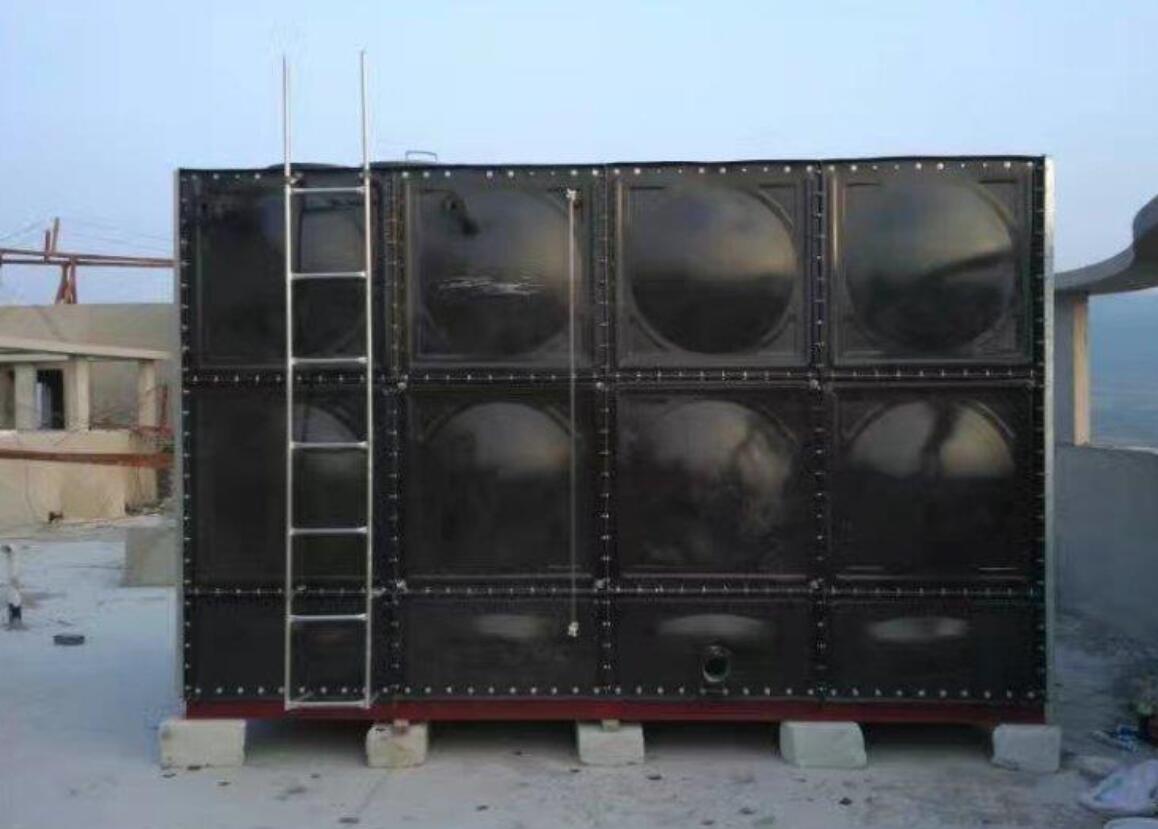
FRP (Fiberglass Reinforced Plastic) water tanks have been used in industrial and civil buildings for over four decades. However, their actual service life is often either underestimated or overestimated. In 2019, a batch of tanks installed at a chemical park in northern China developed widespread leakage after only 12 years, while identical models at a university in the south remained fully functional. This disparity is not a matter of luck—it is the result of material formulation, manufacturing quality, installation conditions, and maintenance practices. Beijing Yuanhui FRP Co., Ltd. has accumulated extensive failure analysis data over nearly two decades of production and field service. This article discusses these real-world findings.
Expected Service Life and Realistic Boundaries
Manufacturers typically rate FRP water tanks for 15–30 years of service, but this number is highly context-dependent. Under normal maintenance, a well-manufactured tank can operate reliably for about 20 years. Beyond 25 years, even if no visible damage exists, the mechanical properties degrade by 30–50% due to resin aging. Beijing Yuanhui FRP Co., Ltd. tested a group of tanks manufactured in 2005 and found that flexural strength dropped from 220 MPa to 145 MPa—a 34% reduction. Thus, the 15–30 year window is a guideline, not a guarantee.
Key Factors Influencing Service Life
1. UV Radiation and Climate Aging
Outdoor FRP tanks are constantly exposed to sunlight. Ultraviolet radiation triggers photo-oxidation in the resin matrix. In northern China, with an average of 2,600 sunshine hours per year, surface micro-cracks appear after five years, and glass fibers may become exposed after ten years. To slow this process, Beijing Yuanhui FRP Co., Ltd. uses isophthalic polyester resin with UV absorbers and applies a weather-resistant gel coat, reducing surface degradation by about 60%. Additional measures include installing sunshades or using light-colored coatings with reflectivity above 70%.
2. Water Chemistry and Chemical Attack
Residual chlorine in drinking water (0.5–1.5 mg/L) slowly attacks the resin, especially at pH below 6.5 or above 8.5. Industrial water containing acids, alkalis, or solvents demands a corrosion-resistant resin system. In 2017, a pharmaceutical plant used ordinary orthophthalic resin tanks for cooling water containing trace acetic acid; within three years, internal blistering and delamination occurred. Beijing Yuanhui FRP Co., Ltd. replaced them with vinyl ester resin tanks, which have operated without issues since. Matching resin type to water chemistry is critical for longevity.
3. Foundation Settlement and Structural Support
Uneven foundation settlement is a common cause of early failure. A 10-ton tank filled with water exerts over 100 kN of load. If the foundation is not compacted or the concrete base is too thin, localized settlement can occur within three years, causing stress concentration and cracking at the bottom. Beijing Yuanhui FRP Co., Ltd. requires a concrete foundation (minimum grade C25) with a levelness tolerance of 3 mm, plus a 15 mm rubber pad beneath the tank to distribute loads evenly.
The Role of Operation and Maintenance
Regular cleaning (recommended every six months) prevents biofilm formation, which can degrade the resin. Daily inspections should focus on flange joints for leakage and the outer surface for discoloration or cracks. Beijing Yuanhui FRP Co., Ltd. advises a comprehensive inspection every five years, including ultrasonic thickness measurement, Barcol hardness testing, and microscopic examination for fiber exposure. Data shows that well-maintained tanks last 8–10 years longer than neglected ones.
Conclusion
The 15–30 year service life of an FRP water tank is not a fixed number—it is a function of resin system, manufacturing quality, installation conditions, and maintenance. UV aging and chemical corrosion are the two primary degradation drivers, while foundation settlement is the most overlooked installation risk. Choosing a reputable manufacturer like Beijing Yuanhui FRP Co., Ltd., specifying water chemistry parameters, installing per standard guidelines, and maintaining a regular inspection schedule are the key steps to ensure a tank meets or exceeds its design life.