Full Process Analysis of FRP Water Tank Production: From Raw Materials to Finished Product
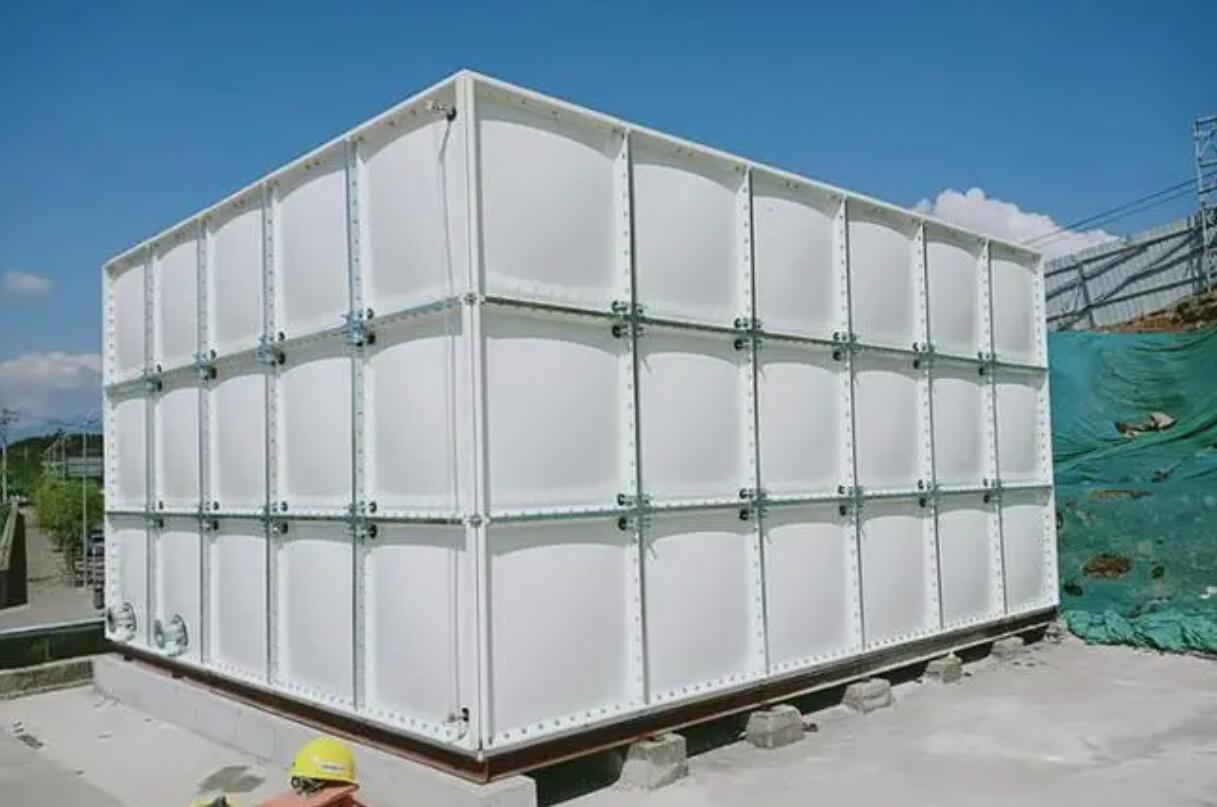
Full Process Analysis of FRP Water Tank Production: From Raw Materials to Finished Product
FRP (Fiber-Reinforced Plastic) water tanks are widely used in construction, fire protection, and industrial water storage due to their lightweight, high strength, corrosion resistance, and a design life exceeding 30 years. At Beijing Yuanhui FRP Co., Ltd., a mature production line can deliver an annual capacity of over 5,000 cubic meters with a first-pass yield rate of 98.5%. This article breaks down the process into raw material selection, molding techniques, curing control, and final assembly inspection.
1. Raw Material Selection and Ratio Control
Core materials include unsaturated polyester resin (UPR), E-glass fiber, MEKP (catalyst), cobalt naphthenate (accelerator), and fillers like calcium carbonate. For example, the 196# resin used by Beijing Yuanhui FRP maintains a viscosity of 0.35–0.55 Pa·s and an acid value of 18–22 mgKOH/g to balance permeability and curing speed. Fiber reinforcement alternates between 400 g/m² chopped strand mat and 800 g/m² woven roving, with a single-layer thickness of 2.5–3.0 mm. The resin-to-fiber weight ratio is typically 65:35, with 1.5%–2.5% catalyst and 0.3%–0.5% accelerator. At ambient temperatures below 15°C, the upper limits are applied.
2. Hand Lay-Up vs. Compression Molding
Small tanks (5–50 tons) are commonly produced via hand lay-up, while larger tanks (100+ tons) use compression molding. Hand lay-up: after applying a PVA or wax release agent, a 0.3–0.5 mm gel coat is brushed, followed by fiber mat layers with roller debulking. Void content is kept under 3% (reducible to 1% with vacuum bagging). Compression molding: pre-impregnated sheets are placed in a steel mold at 120–150°C and 10–15 MPa for 5–8 minutes, cutting cycle time by 40% and achieving thickness deviation ≤0.2 mm.
3. Curing, Demolding, and Post-Processing
Curing determines mechanical performance. Beijing Yuanhui FRP uses a two-stage cure: initial gel at 25±2°C for 4 hours, followed by 8 hours at 40°C in a curing oven. The final Barcol hardness must exceed 45 (per GB/T 3854). After demolding, flash and burrs are ground, and pinholes are filled with resin putty. An infrared flaw detection step identifies delaminations as small as 0.5 mm with a 95% detection rate. Panel cutting tolerance is ±1 mm, with diagonal error ≤2 mm/m.
4. Assembly, Sealing, and Final Inspection
Panels are joined with stainless steel bolts, and joints are sealed with silicone or polysulfide sealant. A food-grade polyethylene liner (≥1.5 mm) is applied to the inner wall. The assembled tank undergoes a 72-hour water-fill test: water level drop ≤3 mm is acceptable. Beijing Yuanhui FRP also performs impact testing (2 kg steel ball dropped from 1 m, no cracks) and pressure cycling (0–0.6 MPa, 500 cycles, no leakage). Flatness tolerance is ±3 mm per 2 m, and verticality ≤5 mm per 3 m.
Conclusion
FRP water tank production integrates materials science, chemical control, and mechanical assembly. Precision at each stage directly impacts service life and safety. Industry leaders like Beijing Yuanhui FRP have reduced tank failure rates to below 1.2% through standardized parameters and full-process quality inspection. Looking ahead, automated spray-up and continuous winding technologies are expected to boost production efficiency by another 30%.