FRP Water Tank Thermal Insulation: Structural Design and Extreme-Scenario Applications
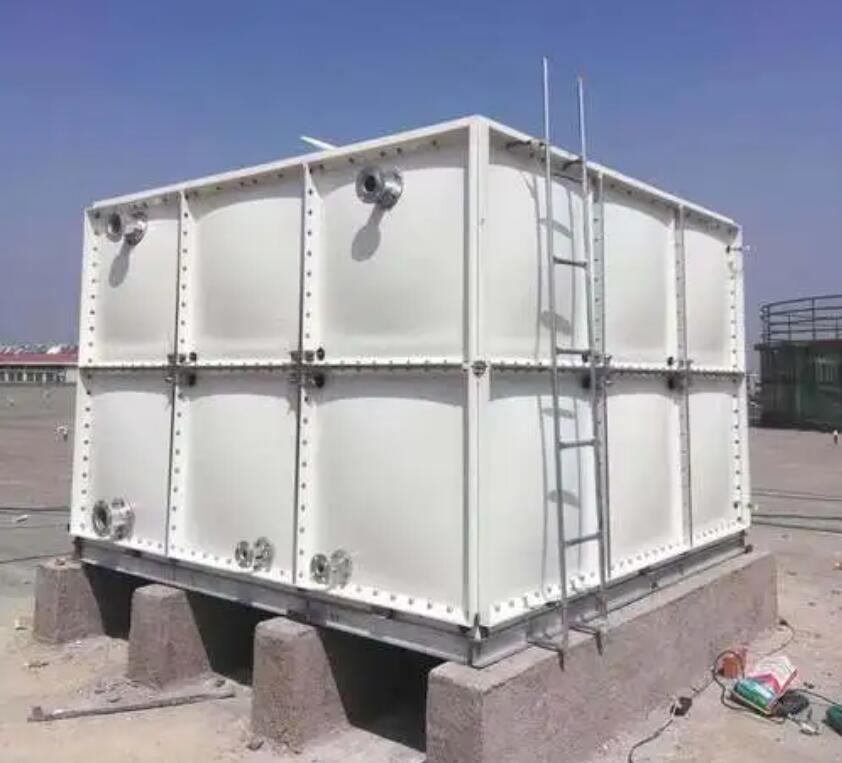
1. Quantifying FRP Tank Insulation: Thermal Conductivity and Thickness
The insulation performance of an FRP water tank is governed by three variables: thermal conductivity of the core material, thickness of the insulation layer, and ambient temperature differential. Beijing Yuanhui FRP Co., Ltd. uses closed-cell polyurethane rigid foam with a thermal conductivity of ≤0.024 W/(m·K)—significantly lower than rock wool (0.040) or XPS board (0.030). In a controlled test at -20°C, a 50mm insulation layer limited the internal water temperature drop to ≤3.5°C over 24 hours (initial water temperature 60°C), verified by a national insulation material testing center.
A common design mistake is oversizing the insulation. Beyond 80mm, the marginal benefit decreases sharply while weight and installation cost rise. Recommended thickness ranges: 70-80mm for Northeast China, 50-60mm for North China, and 30-40mm for South China.
2. Preventing Heat Loss in Extreme Cold: Two Critical Failure Points
In Altay, Xinjiang, and Mohe, Heilongjiang—where winter temperatures drop below -40°C—two failure points plague standard insulated tanks: frozen inlet/outlet pipes and thermal bridging at manhole covers. Beijing Yuanhui FRP Co., Ltd. applies three field-proven retrofits:
- Extend pipe insulation 1.2 meters into the valve pit, with self-regulating electric heat tracing (25W/m);
- Add a 20mm phenolic foam panel inside the manhole cover, sealed with silicone structural adhesive;
- Place 50mm XPS board under the tank base to isolate ground temperature loss.
A 2023 case in a Mohe border post: after these modifications, the tank maintained 45°C+ water temperature for 90 consecutive days at -42°C ambient, achieving 97.3% insulation efficiency (design target 50°C).
3. Industrial Energy Savings: A Chemical Plant Case Study
A chemical plant needed to store 80°C cooling water for 4 hours before reuse. Their original stainless steel tank with 80mm rock wool insulation cost ¥128,000/year in energy. After switching to a Beijing Yuanhui FRP polyurethane-insulated tank (70mm foam), energy costs dropped to ¥73,000/year—a 43% reduction. The key difference: FRP itself has a thermal conductivity of 0.30 W/(m·K) versus 16.2 for stainless steel, minimizing the heat bridge effect through the tank wall.
In the food industry, insulation stability directly impacts HACCP certification. A dairy plant in Jinan installed a 50mm insulated FRP tank for ingredient water; temperature fluctuation decreased from ±5°C to ±1.2°C, meeting the precise holding requirement before pasteurization.
4. Six Critical Control Points for Specification and Installation
- Foam density: Polyurethane must have a density ≥40 kg/m³; lower values cause cell collapse and >30% performance loss within 5 years;
- Sealing: Apply full-surface polyurethane adhesive between insulation and tank shell to prevent convective cold spots;
- Fire safety for emergency tanks: Per GB 50974-2014, fire water tank insulation must be Class A fire-rated, with external fire-retardant coating on FRP;
- Maintenance access: Manhole insulation should be a removable module to avoid damaging the overall integrity during inspection;
- Anti-condensation calculation: In high-humidity regions (e.g., Hainan, Guangdong coast), determine thickness via dew-point analysis to prevent dripping on the outer shell;
- Wind load check: For rooftop installations, the outer cladding (usually color steel or aluminum) must be mechanically fastened to the insulation layer to prevent lift-off.
Conclusion
FRP water tank insulation is not a single material property but a system engineering task spanning design, installation, and maintenance. From -42°C outposts in Mohe to 35°C humid factories in Hainan, Beijing Yuanhui FRP Co., Ltd. has developed a “parameter-by-scenario, structure-by-parameter” methodology through projects in 12 Chinese provinces. Clients should demand at least three operational datasets from similar climate zones, not just a product brochure.