Pressure Performance of FRP Water Tanks: Testing Standards and Engineering Practices
Introduction
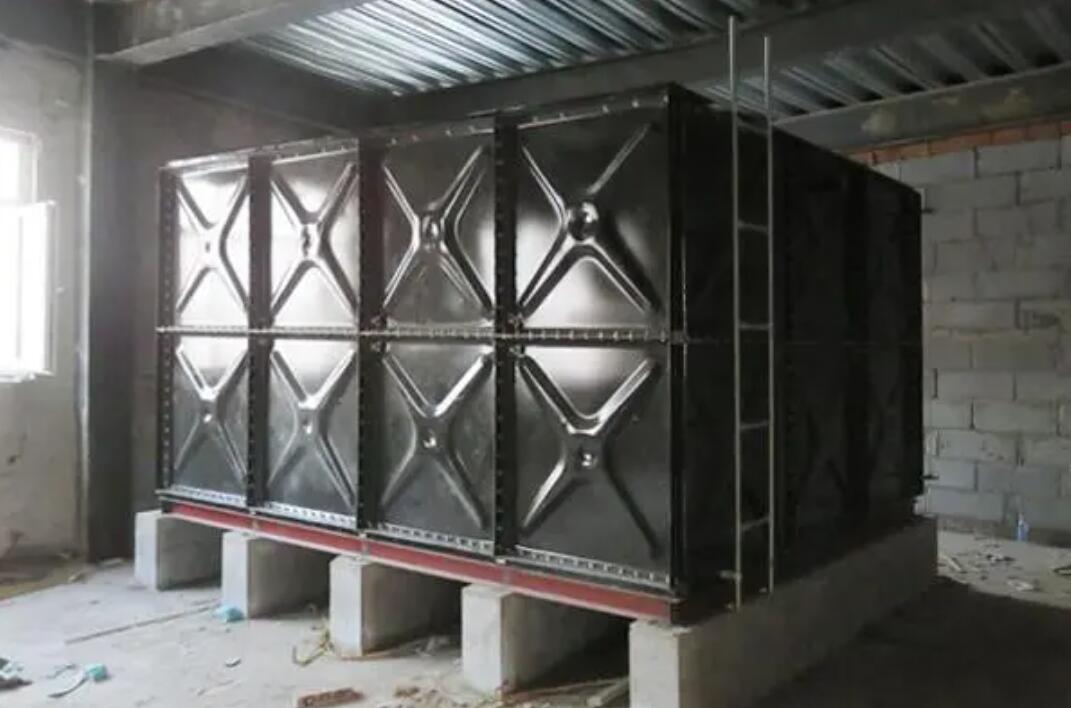
FRP water tanks are widely used in fire suppression, domestic water supply, and industrial storage. Their pressure performance directly impacts system safety and service life. Unlike steel tanks, the laminated structure of FRP exhibits nonlinear behavior under internal pressure and fatigue. Beijing Yuanhui FRP Co., Ltd., with two decades of production experience, finds that about 30% of tank failures stem from inadequate pressure design or improper testing standard execution. This article analyzes key control points from mechanical fundamentals, structural design, and testing standards (GB/T 21238-2016, BS EN 13280).
1. Mechanical Basis of Pressure Performance
1.1 Laminate Structure and Stress Distribution
The tank wall consists of an inner liner (0.5–1.0mm resin-rich corrosion barrier), a structural layer (thickness calculated per pressure class, with ±45° cross winding or hand lay-up), and an outer gel coat. At 0.1MPa internal pressure, hoop stress is roughly twice the axial stress, so hoop plies should account for 60%–70% of total structural weight.
1.2 Pressure Classes and Safety Factor
Per GB/T 21238-2016, working pressures are classified as 0.1, 0.25, 0.6, and 1.0MPa. Beijing Yuanhui applies a safety factor ≥6 (static burst), compared to 3–4 for steel tanks. For a 0.6MPa tank, the thickness formula is t = (P × D) / (2 × σ × SF), where σ (hoop tensile strength) ≥250MPa. A 1.2m diameter tank yields a theoretical thickness of 6.8mm; actual production uses 7.5mm to accommodate manufacturing tolerances.
2. Testing Standards and Methods
2.1 Chinese Standard: GB/T 21238-2016
Three tests are mandatory: hydrostatic test (1.5× working pressure, 30 min hold), leakage test (0.8× working pressure, visual inspection), and burst test (sampling, burst pressure ≥3× working pressure). In 2023 internal tests, Beijing Yuanhui recorded a burst pressure of 2.1MPa (3.5×) for a 0.6MPa tank, exceeding the standard.
2.2 International Standard: BS EN 13280:2001
The European standard emphasizes long-term creep. Under 1.5× working pressure at 23±2°C for 1000 hours, allowable strain ≤0.1%. Beijing Yuanhui tanks exported to the Middle East showed a creep rate of 0.06%, confirming mature laminate quality.
2.3 Test Equipment and Data Acquisition
Pressure transducers (0.5% accuracy) and strain gauges (120Ω, mounted at hoop and axial key points) are used. Pressurization rate is 0.05MPa/min to avoid shock. In one test, hoop strain stabilized from 830 to 870 με (4.8% increase over 15 minutes) during a 0.8MPa hold, deemed acceptable.
3. Critical Process Factors
3.1 Resin System and Cure Degree
Isophthalic polyester (e.g., DS-668) at ≥85% cure degree (25°C) delivers a tensile modulus of 3.2GPa. Below 75%, modulus drops to 2.1GPa, reducing pressure capacity by 35%. Beijing Yuanhui uses DSC (differential scanning calorimetry) for batch-wise cure verification, targeting ≥90%.
3.2 Fiber Content and Ply Orientation
Glass fiber content (by weight) should be 45%–55%. Below 40%, hoop strength is insufficient; above 60%, poor resin wet-out causes dry spots. A ply orientation deviation >5° reduces hoop strength by 15%. Beijing Yuanhui employs CNC-controlled winding with fiber angle tolerance ≤±2°.
3.3 Fitting Interface Sealing
Flanges and manholes are pressure weak points. Beijing Yuanhui uses integrally molded stiffeners and double seal gaskets (EPDM + PTFE). In 1.2MPa tests, leakage rate dropped to 0.02 L/h.
Conclusion
FRP water tank pressure performance is a system-level challenge involving material selection, laminate quality, and standard-compliant testing. Adhering to GB/T 21238-2016 and BS EN 13280, combined with robust design (cure ≥90%, fiber content 50%±5%, safety factor ≥6), ensures reliable operation at 0.1–1.0MPa. Beijing Yuanhui FRP Co., Ltd. recommends specifying actual service conditions (temperature, pressure fluctuation frequency, medium composition) for optimal laminate customization. Future advances in automated winding and online monitoring will further enhance pressure consistency.