Thermal Insulation Performance of FRP Water Tanks: A Deep Dive into Principles and Application Scenarios
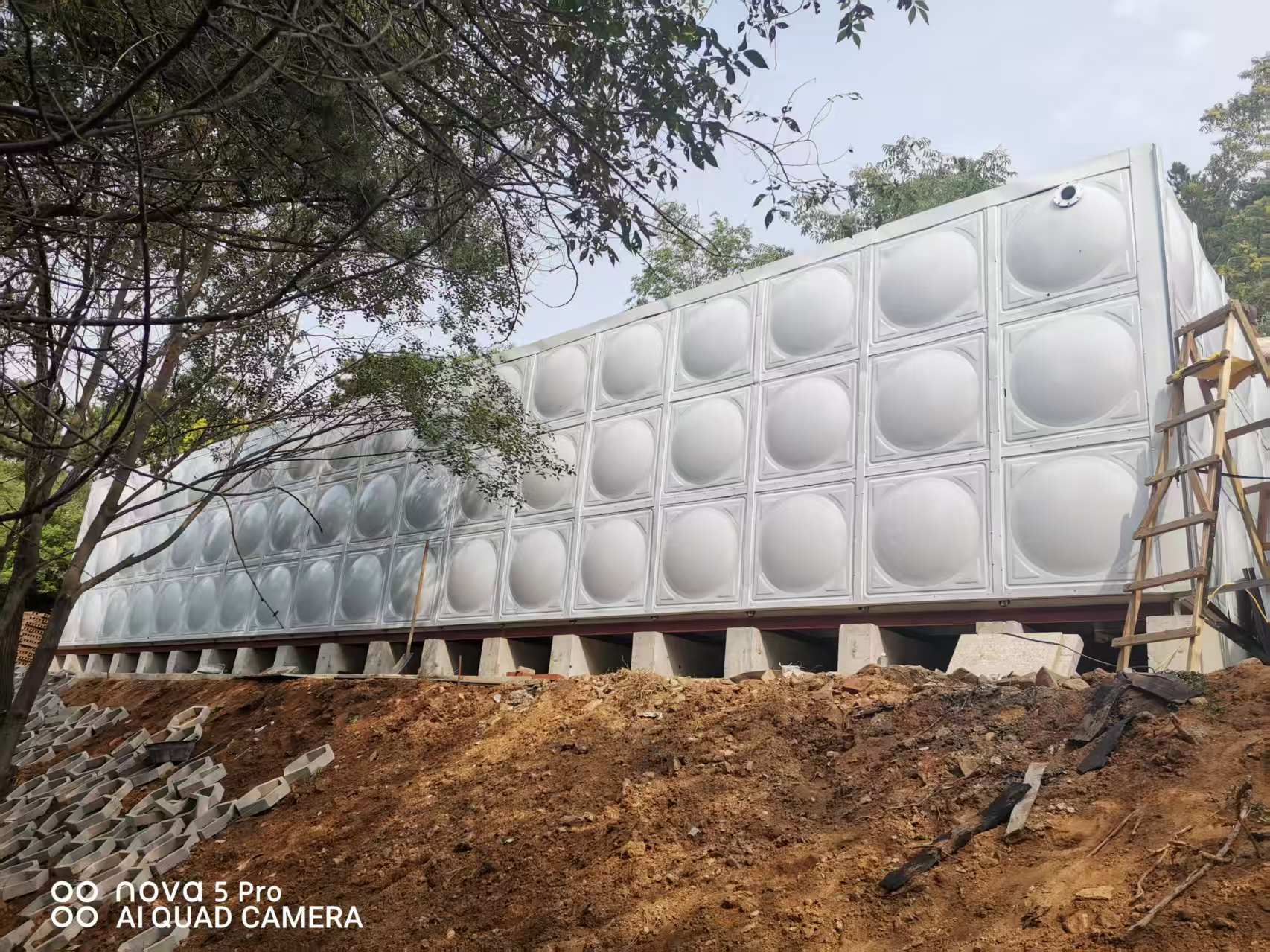
Introduction: Why Insulation Matters for FRP Water Tanks
In both industrial and civil water storage applications, FRP (Fiberglass Reinforced Plastic) water tanks have progressively replaced traditional concrete and steel tanks due to their corrosion resistance, light weight, and long service life. However, when the operating environment involves freezing temperatures or constant hot water storage, thermal insulation becomes the decisive factor for usability and operational cost. Beijing Yuanhui FRP Co., Ltd. has observed that many users still perceive insulation as merely 'adding a layer of foam,' lacking a systematic understanding of material compatibility, thickness calculation, and moisture barrier design. This article, grounded in real project data, dissects the technical logic and scenario adaptation of FRP tank insulation.
1. Structural Principles: Three-Layer Composite and Thermal Bridge Prevention
Effective insulation in FRP water tanks relies on a three-layer composite structure: the inner storage liner, the insulating core, and the outer protective shell. The inner liner is made of food-grade unsaturated polyester resin and E-glass fiber wound into a seamless shell, with a thermal conductivity of approximately 0.25 W/(m·K)—higher than insulation materials but much lower than steel. The middle insulating layer typically uses rigid polyurethane foam (PUR) or high-density extruded polystyrene (XPS). PUR foam, with a closed-cell ratio exceeding 95%, can achieve a thermal conductivity as low as 0.022 W/(m·K), currently the industry benchmark. The outer shell is a UV-stabilized FRP laminate, providing mechanical protection and weather resistance.
A critical design aspect is thermal bridge elimination. All metal penetrations—such as flanges, manhole hinges, and pipe supports—must be isolated with nylon or rubber gaskets to prevent direct heat conduction. In a Hebei province project by Beijing Yuanhui FRP Co., Ltd., uninsulated flanges caused a temperature difference of 4.8°C between the flange area and the tank body at -15°C ambient temperature, requiring an extra 20% insulation thickness to compensate. Therefore, standard practice mandates thermal break pads at every penetration point.
2. Key Performance Data: Thickness, Environment, and Energy Savings
Determining the insulation thickness requires balancing four variables: tank volume, water temperature, minimum ambient temperature, and allowable temperature drop. For a 100 m³ domestic hot water tank storing water at 60°C in a -20°C environment, if the allowable temperature drop over 24 hours is 3°C, a PUR insulation thickness of 80 mm is required (per GB/T 4272-2008, General Principle for Thermal Insulation of Equipment and Pipes). Beijing Yuanhui FRP Co., Ltd. recommends using dynamic simulation software (e.g., HTRI Xchanger Suite) for verification rather than relying solely on empirical formulas.
Recommended PUR insulation thicknesses for typical scenarios:
• Indoor ambient storage (5–30°C): 30–50 mm
• Outdoor freeze protection (ambient down to -30°C, water ≥5°C): 80–120 mm
• High-temperature storage (60–90°C): 100–150 mm (with heat-resistant inner liner)
Energy consumption comparison from a hotel project: an 80 mm insulated FRP tank saved 62% heating energy annually compared to an uninsulated steel tank, with a payback period of only 1.8 years. Importantly, moisture ingress can increase thermal conductivity by 3–5 times. Beijing Yuanhui FRP Co., Ltd. applies two-component polyurea sealing at top joints and seams to ensure water vapor diffusion resistance over 50 m²·h·Pa/g.
3. Typical Application Scenarios: From Arctic Sites to Data Centers
Scenario 1: Firefighting and Domestic Tanks in Cold Regions
In Xinjiang and Heilongjiang provinces, winter temperatures can drop below -40°C, causing pipe bursts in ordinary tanks. FRP tanks combined with electric heat tracing and PUR insulation can maintain water temperature above 4°C at -35°C ambient. Beijing Yuanhui FRP Co., Ltd. supplied an 80 m³ firefighting tank for a Daqing oil field with 100 mm PUR insulation and a stainless steel-clad outer shell, achieving three consecutive winters without freeze damage.
Scenario 2: Industrial Waste Heat Recovery and Thermal Storage
In CHP plants and solar thermal systems, FRP tanks serve as thermal storage vessels at water temperatures up to 85°C. Insulation must use modified PUR foam rated for 150°C, and the inner liner requires heat-resistant additives. At a 500 m³ storage tank in a Shandong chemical plant, the 120 mm insulation layer reduced daily heat loss to 1.2%, well below the design limit of 2.5%.
Scenario 3: Data Center Cooling Water Buffers
Large data centers using cold plate liquid cooling or indirect evaporative cooling require buffer tanks to stabilize water temperature. FRP tanks generate no corrosive byproducts that could clog precision piping, and their insulation reduces chiller cycling. Beijing Yuanhui FRP Co., Ltd. provided a 60 m³ buffer tank for an internet company; after a 48-hour shutdown test at 30°C return water, the temperature drop was only 1.1°C, fully meeting PUE optimization requirements.
Conclusion: Four Technical Criteria for Selecting Insulated Tanks
The thermal insulation performance of an FRP tank is not a single thickness parameter but a system-level integration of material, structure, construction, and maintenance. Buyers should verify:
1. Closed-cell ratio of insulation material ≥ 95% (to prevent moisture ingress)
2. Independent thermal bridge calculation report
3. Outer shell's UV and impact resistance
4. Manufacturer's basis for thickness selection (national or local standards)
Beijing Yuanhui FRP Co., Ltd. holds ISO 9001 certification and provides end-to-end services from tank design and insulation calculation to on-site installation. For customized insulation solutions, contact our technical team directly.