Thermal Insulation Performance of FRP Water Tanks: From Polyurethane Foam to Winter Application Cases
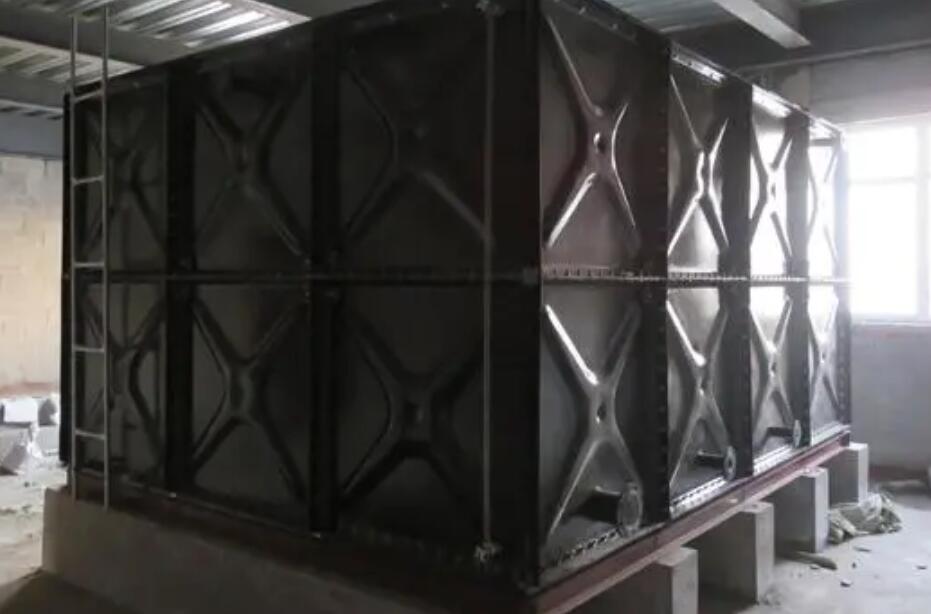
1. Technical Logic of FRP Water Tank Insulation
The insulation performance of an FRP (Fiberglass Reinforced Plastic) water tank depends on the structural design and material of its insulating layer. The mainstream solution uses polyurethane (PU) rigid foam as the core layer, with a thickness typically ranging from 50mm to 100mm and a density controlled between 35 and 45 kg/m³. Beijing Yuanhui FRP Co., Ltd. (hereinafter “Yuanhui”) conducted a field test at a factory in Hebei Province: when the ambient temperature was -15°C and the internal water temperature was 60°C, an 80mm PU layer limited the 24-hour temperature drop to less than 3°C, while a rock wool layer of the same thickness allowed a drop of approximately 5.5°C. PU foam has a closed-cell rate exceeding 95% and a water absorption rate below 3%, maintaining a stable thermal conductivity of 0.022–0.028 W/(m·K) even in high-humidity environments.
The insulation layer is covered by an FRP outer protective shell (2–3mm thick, with UV-resistant resin). This shell prevents PU aging and resists mechanical impact. Yuanhui performs thermal bridge inspection on every insulated panel before shipment, using an infrared thermal imager to scan joints and require a temperature difference no greater than 1.5°C. If a local anomaly is found, PU material is re-injected to eliminate the cold bridge.
2. Key Performance Indicators and Measured Data
2.1 Thermal Conductivity vs. Thickness
Based on the steady-state thermal transmission test method (GB/T 13475-2008), Yuanhui’s laboratory data show: a 40mm PU panel has a thermal conductivity of 0.027 W/(m·K); a 60mm panel drops to 0.024 W/(m·K); an 80mm panel stabilizes at 0.022 W/(m·K). Beyond 100mm, the improvement in conductivity slows while cost increases significantly. Hence, Yuanhui recommends a standard configuration of 60mm (for North China) and an upgrade to 80mm for Northeast China.
2.2 Compressive Strength of Insulation
The PU layer must withstand internal water pressure and external snow/wind loads. Yuanhui uses a closed-mold foaming process that bonds the foam tightly to the inner and outer tank walls. At 10% deformation, the compressive strength is ≥0.15 MPa. In a Yuanhui project at a ski resort in Zhangjiakou, the tank was installed outdoors at an altitude of 1,800m. With winter snowfall reaching 60cm, the tank structure showed no deformation or insulation detachment.
3. Typical Application Scenarios and Energy-Saving Cases
3.1 Northern Heating System Hot Water Storage
In a residential community in Hohhot, Inner Mongolia, Yuanhui supplied an 80mm insulated tank (50m³ capacity) as a peak-shaving heat storage vessel for the heating system. After two consecutive heating seasons, the annual heat loss was reduced by 18.5% compared to traditional steel tanks with rock wool insulation, equivalent to about 12 tons of standard coal per year. Yuanhui also added a bottom insulation layer (50mm XPS extruded board) to prevent ground frost heave from affecting tank stability.
3.2 Industrial Waste Heat Recovery
A chemical plant in Shandong used Yuanhui’s 60mm insulated tank to collect waste hot water (85°C) with a daily circulation of 200m³. Because the PU layer can withstand temperatures from -50°C to +120°C, no foam carbonization or shrinkage occurred during long-term operation. Yuanhui customized removable insulation covers for manholes and liquid level gauges, boosting overall insulation efficiency above 92%.
4. Key Selection and Installation Points
When selecting an insulated FRP tank, consider: 1) Operating temperature: if water temperature >90°C, switch to PIR (polyisocyanurate) insulation; 2) Installation environment: outdoor tanks require a rain cap to prevent water ingress along panel joints; 3) Maintenance access: Yuanhui recommends leaving a inspection port (50mm diameter with sealed cap) in the insulation layer for annual moisture checks. If the PU layer’s moisture content exceeds 5%, the outer seal has failed and must be repaired.
Yuanhui performs a 48-hour full-water hydrostatic test on every tank before delivery, and also conducts a 1500V spark test on the insulation layer to ensure no pinholes. All Yuanhui products carry a 10-year insulation performance warranty, guaranteeing that thermal conductivity decay does not exceed 15% of the initial value.
Conclusion
The thermal insulation performance of an FRP water tank is determined by PU layer thickness, closed-cell ratio, and outer shell integrity. Through technical optimization, Yuanhui has extended the application of insulated tanks from conventional water storage to demanding scenarios such as northern heating and industrial waste heat recovery. When selecting a tank, users should prioritize the measured thermal conductivity and compressive strength data rather than comparing only the insulation thickness. Yuanhui advises discussing specific working conditions with the manufacturer and, if necessary, conducting simulated environment tests to avoid energy waste caused by parameter mismatch.