Thermal Insulation Performance of FRP Water Tanks: From Polyurethane Foam to Multi-Scenario Applications
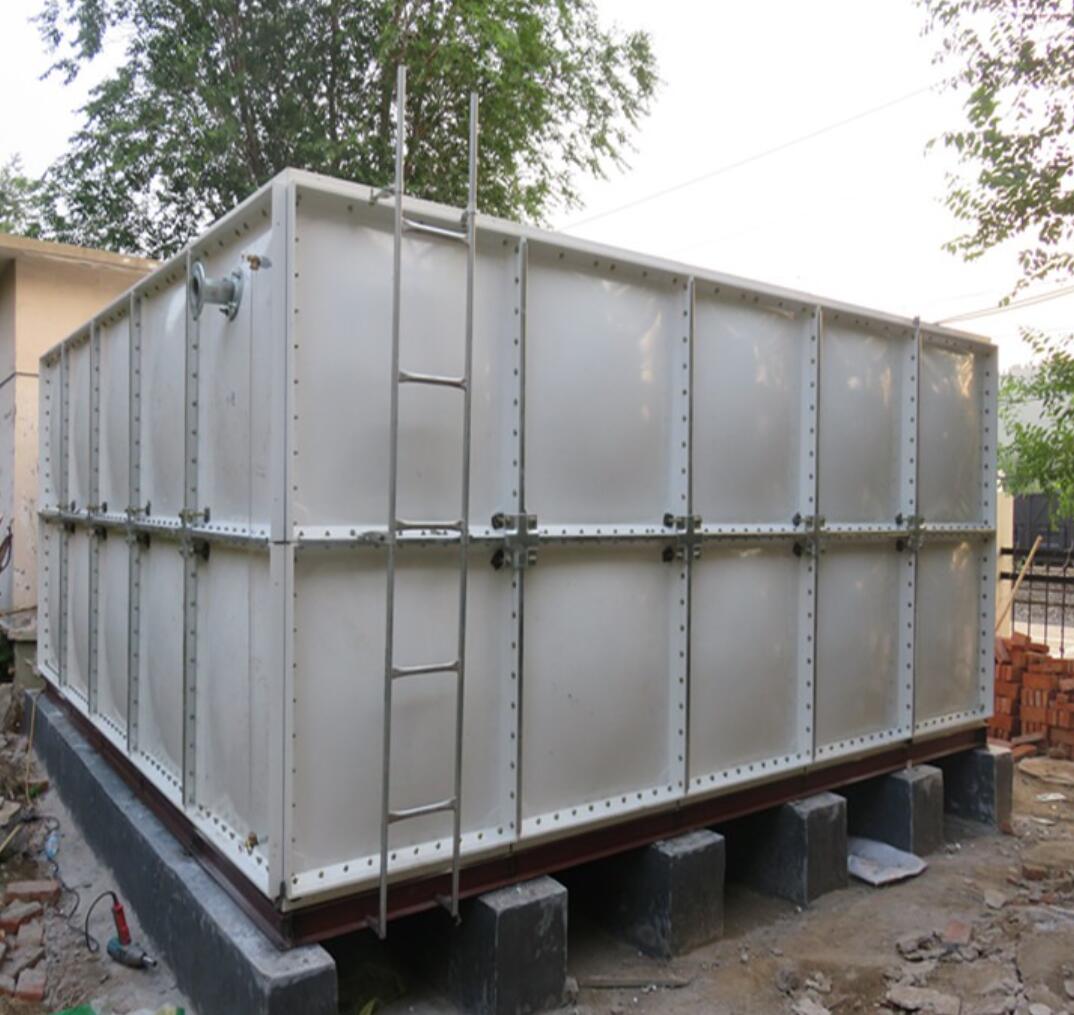
Introduction: Insulation Is More Than Just Wrapping
FRP (Fiberglass Reinforced Plastic) water tanks are widely used in industrial and civil sectors, but their stable operation in cold climates or constant-temperature systems depends heavily on the design and execution of thermal insulation. Many users mistakenly believe that insulation simply means wrapping the tank with a layer of material. In reality, insulation performance is a combined result of material selection, thickness calculation, moisture sealing, and structural integrity. Beijing Yuanhui FRP Co., Ltd. has observed in years of practice that most insulation failures result not from material defects, but from poor detailing.
Insulation Material Selection and Thermal Parameters
Polyurethane Rigid Foam: The Current Best Option
Polyurethane rigid foam (PUR/PIR) is the mainstream choice for FRP tank insulation, with a thermal conductivity as low as 0.022 W/(m·K). For a standard insulated tank produced by Beijing Yuanhui, a 50mm PUR layer limits the temperature drop to under 3°C over 24 hours at an ambient temperature of -10°C and water temperature of 60°C. Compared to traditional rock wool (thermal conductivity ~0.040 W/(m·K)), energy efficiency improves by approximately 45% at the same thickness.
Applicable Boundaries of NBR/PVC and Phenolic Foam
NBR/PVC rubber foam offers good flexibility, making it suitable for irregular shapes and pipe insulation. However, its long-term temperature resistance is inferior to PUR—it shrinks above 80°C. Phenolic foam (PF) has excellent fire resistance (up to Class A) but is brittle and has a high moisture absorption rate. When used for external tank insulation, it requires additional waterproofing. Beijing Yuanhui generally does not recommend PF for outdoor water tanks, as moisture absorption can double its thermal conductivity.
Key Points in Insulation Structure Design and Construction
Cold Bridge Prevention and Sealing
The most common cause of insulation failure is the "cold bridge"—metal brackets, flanges, or pipes that penetrate the insulation layer without isolation. Data show that a single untreated metal bracket can increase local heat loss by over 300%. Beijing Yuanhui's solution is to wrap all penetrations with 15mm rubber gaskets and apply weather-resistant sealant at joints. Additionally, the insulation layer must be covered with a protective sheet (aluminum foil or color steel plate, ≥0.5mm thick) to prevent UV degradation and moisture infiltration.
Engineering Method for Thickness Calculation
Insulation thickness is not simply "the thicker the better." Based on GB/T 4272-2008 and actual site conditions, Beijing Yuanhui applies the following empirical rules: when the temperature difference ΔT between water and ambient is ≤30°C, use 40-50mm PUR; for ΔT=30-60°C, use 60-80mm; for ΔT>60°C, perform step-by-step calculation. For example, a chemical plant in northern China required the tank water to remain at 80°C for process cleaning, with a minimum ambient temperature of -25°C. Beijing Yuanhui designed an 80mm PUR layer with a double-layer waterproof structure. After two years of operation, the temperature drop remained within 5°C.
Typical Application Scenarios and Selection Recommendations
Domestic Hot Water Systems in Cold Regions
In Northeast and Northwest China, winter extremes can reach -40°C. In such scenarios, insulated tanks not only require a thicker insulation layer but also electric heat tracing for freeze protection. Beijing Yuanhui supplied a 50-ton FRP insulated tank to a residential community in Inner Mongolia, featuring 60mm PUR and 30W/m self-regulating heat tracing. Over three consecutive winters at -35°C, no freezing or excessive temperature drop occurred.
Industrial Constant-Temperature Storage and Fire Reserve Water
In food and pharmaceutical industries, tank wash water must remain at 60-70°C with a fluctuation of ±2°C. The insulation performance of the FRP tank is critical here. Beijing Yuanhui custom-built an insulated tank for a dairy company, adding a 316L stainless steel inner liner (for corrosion resistance) and 80mm external PUR insulation. Combined with an intelligent temperature control system, the actual water temperature fluctuation was only ±1.5°C. For fire reserve tanks, the insulation must maintain integrity under high temperatures—PUR foam carbonizes above 200°C, so fire-rated boards or inorganic insulation materials are required on the outer layer.
Chilled Water Storage in Data Centers
Data center cooling stations often use chilled water storage tanks to utilize cheap nighttime electricity for cooling and release it during the day. FRP tanks are preferred for small-to-medium data centers due to their corrosion resistance, light weight, and good insulation. Beijing Yuanhui supplied a 100m³ chilled water tank to a supercomputing center, with 70mm insulation, achieving a storage efficiency of over 92% and energy savings of approximately 15% compared to traditional concrete tanks.
Conclusion
The thermal insulation performance of FRP water tanks is a system engineering issue, not a single-material problem. Polyurethane rigid foam is currently the dominant insulation material due to its low thermal conductivity, ease of installation, and cost-effectiveness. However, in extreme high-temperature or strict fire-resistance scenarios, supplementary measures are necessary. Beijing Yuanhui FRP Co., Ltd. recommends that users conduct custom design based on actual working conditions (ambient temperature, water temperature, humidity, fire rating) and periodically inspect the sealing and waterproofing of the insulation layer. Proper insulation significantly extends tank service life and improves system energy efficiency.