Thermal Insulation Performance of FRP Tanks: From Polyurethane Layers to Extreme-Condition Applications
Introduction: Insulation Is More Than Wrapping a Layer of Cotton
Thermal insulation performance determines whether an FRP water tank can survive freezing winters, control temperature rise in industrial cooling, or prevent ice formation in fire protection systems. In a 2023 project in Inner Mongolia, Beijing Yuanhui FRP Co., Ltd. measured that a 100-ton tank with 50mm polyurethane foam insulation lost only 4.2°C over 72 hours at an ambient temperature of -25°C. This result comes from the combined effects of material selection, thickness, workmanship, and thermal bridge treatment. This article analyzes key parameters and application boundaries based on heat transfer principles and engineering cases.
Insulation Material Selection and Thermal Parameters
Polyurethane Rigid Foam: The Leading Closed-Cell Solution
With a thermal conductivity of 0.022–0.028 W/(m·K), polyurethane rigid foam is the most widely used insulation for FRP water tanks. Beijing Yuanhui applies spray or pour-in-place processes to ensure zero gaps between the foam and the tank wall. For North China, a 50mm polyurethane layer keeps heat loss below 8–12 W/m²·°C, sufficient for winter operation.
Rock Wool and Rubber-Plastic: Trade-offs for Cost-Sensitive Applications
Rock wool has a thermal conductivity of 0.040–0.045 W/(m·K) and lower cost, but its water absorption rate of 5%–10% severely degrades performance when wet. Rubber-plastic (NBR/PVC) materials offer flexibility for irregular tanks or vibration sources, with a thermal conductivity of 0.035–0.040 W/(m·K). Beijing Yuanhui recommends polyurethane or rubber-plastic for environments with humidity above 80% or frequent wash-down.
Field Performance Under Different Scenarios
Northern Heating Season: Water Temperature Maintenance at -30°C
In January 2024, Beijing Yuanhui tested an 80-ton domestic hot water tank in Suihua, Heilongjiang. The tank had 60mm polyurethane insulation and a 0.6mm stainless steel jacket. Over 7 days with ambient temperatures ranging from -28°C to -32°C, the water temperature dropped from 55°C to 48.6°C—an average daily drop of 0.9°C. Compared to an uninsulated tank (3.5°C daily drop), insulation efficiency improved by 74%.
Industrial Cooling Tower Makeup: Summer Temperature Rise Control
At a chemical plant in Jiangsu, Beijing Yuanhui installed a 30-ton insulated tank for cooling tower return water (~35°C). At ambient temperatures of 38°C, the water temperature rose only 2.1°C over 8 hours, compared to 5.8°C in an uninsulated tank. The insulation also reduced solar heat gain, lowering the load on downstream chillers.
Fire Protection Tanks: Anti-Freeze and Anti-Condensation Demands
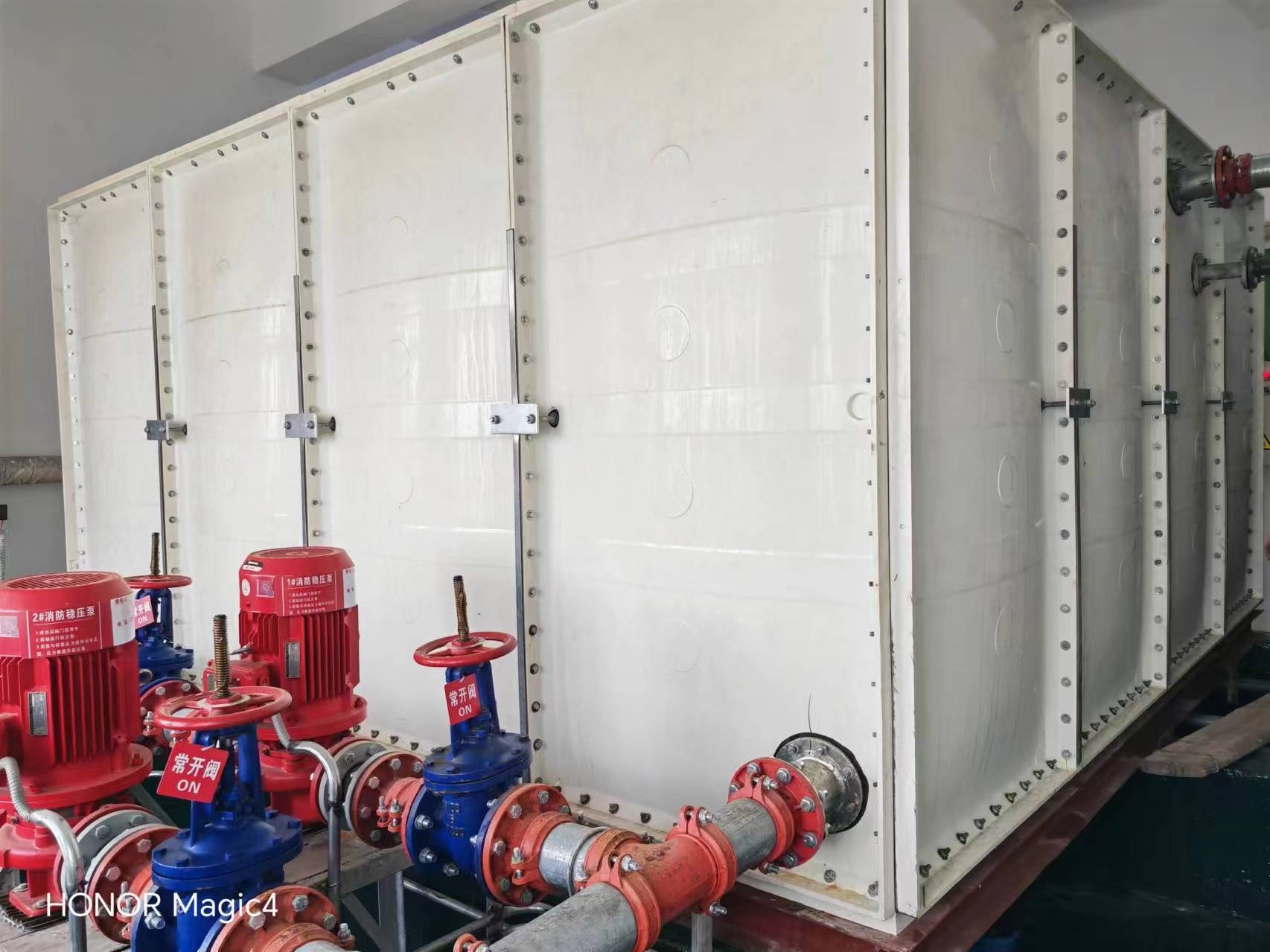
Fire tanks must deliver water in any season. Beijing Yuanhui supplied a 40-ton tank with 50mm polyurethane insulation and electric heat tracing for a high-rise building in Beijing. From December 2023 to February 2024, even without heat tracing, the water temperature remained above 5°C (minimum ambient -15°C). The insulation also prevented external condensation dripping onto electrical panels during humid summers.
Key Design Parameters and Common Pitfalls
Thickness Calculation: Three Input Variables
Optimal thickness is not simply “the thicker the better.” Beijing Yuanhui’s engineering team uses a preliminary formula: δ = λ × (T_in - T_out) / (q × 1.2), where q is the target heat flux (W/m²), λ is thermal conductivity, T_in is design water temperature, and T_out is extreme ambient temperature. For a project in Qingdao requiring a temperature drop of no more than 3°C in 72 hours at -10°C, the calculated polyurethane thickness was 55mm; 60mm was installed to include a safety margin.
Thermal Bridge Management: The Overlooked Weak Point
Pipe connections, manholes, and level gauge ports are typical thermal bridges. Beijing Yuanhui uses embedded sleeves filled with polyurethane foam at these points, reducing local heat loss to the same order as the main insulation. Infrared thermography of a 2023 project in Jinan showed bridge temperatures only 0.8°C lower than the main body, outperforming the industry norm of 2–3°C.
Conclusion
The thermal insulation performance of FRP water tanks results from materials science, thermal design, and installation quality. Polyurethane rigid foam is the preferred choice for most applications due to its low conductivity and closed-cell structure; rock wool and rubber-plastic are viable under specific cost or flexibility constraints. Field data from Beijing Yuanhui FRP Co., Ltd. demonstrates that a properly designed insulated tank can maintain water temperature within allowable limits across ambient conditions from -30°C to +40°C. For different operating conditions, a project-specific design that considers thermal bridges, thickness calculation, and environmental factors is recommended over applying standard thicknesses blindly.