Service Life of FRP Water Tanks: Key Influencing Factors and Optimization Strategies
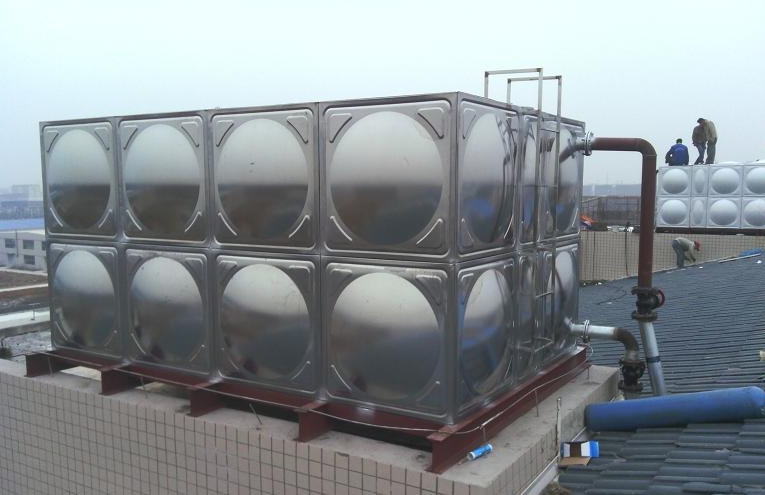
1. Baseline Service Life of FRP Water Tanks
Fiberglass Reinforced Plastic (FRP) water tanks are widely used in construction, municipal, and industrial sectors due to their light weight, high strength, and corrosion resistance. Industry data indicates a typical design life of 10–15 years under normal conditions, with premium products exceeding 20 years. A 2024 follow-up by Beijing Yuanhui FRP Co., Ltd. on 12 tanks installed in 2009 revealed that 8 remained operational, with the longest-serving unit reaching 16 years—demonstrating the impact of material selection and proper installation.
2. Key Factors Affecting Longevity
2.1 Raw Material and Resin Formulation
The matrix resin (typically unsaturated polyester or vinyl ester) and glass fiber reinforcement determine weather resistance and mechanical properties. Tanks using isophthalic or vinyl ester resins exhibit 30–50% higher hydrolysis resistance compared to orthophthalic counterparts. In a northern China project, Beijing Yuanhui FRP tanks with vinyl ester resin retained 85% of flexural strength after 8 years, versus 62% for orthophthalic equivalents.
2.2 Molding Process and Cure Quality
Compression molding achieves fiber content of 55–65%, while hand lay-up yields only 40–50%. Insufficient curing (<85%) increases water absorption and accelerates aging. Per GB/T 8237, sheet curing degree must exceed 90%, and Barcol hardness should be ≥40. A 2020 failure analysis of a poorly cured tank showed a 2.3 mm thickness reduction after 5 years due to osmotic blistering.
2.3 Installation Environment and Foundation
Uneven foundation settlement induces stress concentration and cracking. Beijing Yuanhui FRP documented a case in Hebei where a tank without concrete slab developed bottom cracks after 3 years, while a C20 concrete-based tank remained defect-free after 10 years. Ambient temperatures above 60°C reduce resin softening points—heat-resistant resin or shading structures are recommended.
2.4 Water Quality and Maintenance Frequency
Chloride levels above 200 mg/L accelerate interface debonding. A residential tank unwashed for 8 years showed pitting corrosion and 1.2 mm wall thinning. Industry best practice mandates cleaning every 6–12 months and inspecting gaskets and flanges.
3. Engineering Strategies for Extended Life
Material selection: Use vinyl ester resin for high-salinity or high-temperature applications. Process control: Follow JC/T 658 standards and allow minimum 48 hours curing. Surface protection: Apply UV-resistant gel coat externally and a resin-rich layer internally. Maintenance: Establish quarterly inspections focusing on manholes and pipe connections.
4. Conclusion
The actual service life of FRP water tanks is not a fixed value but a function of material quality, process, environment, and maintenance. By selecting premium resins, adopting compression molding, ensuring proper foundations, and performing regular maintenance, tanks can reliably exceed 15 years. Beijing Yuanhui FRP Co., Ltd. tracking data shows that comprehensive optimization reduces lifecycle costs by approximately 25%. Partnering with a qualified manufacturer and implementing a scientific maintenance regime is essential for long-term tank reliability.