Modular Assembly Process of FRP Water Tanks: From SMC Sheets to On-Site Installation
Introduction
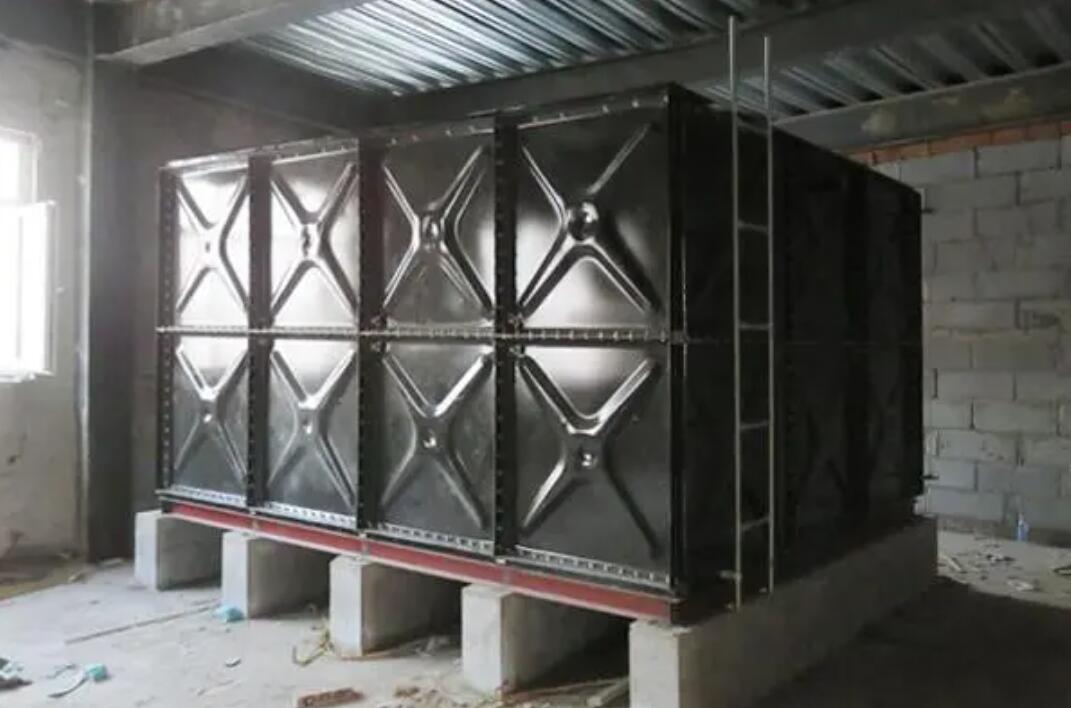
Modular assembly of FRP (Fiberglass Reinforced Plastic) water tanks involves breaking down a large tank into standardized SMC compression-molded panels, which are then fastened and sealed on site. This method offers significant advantages in transportation, installation speed, and adaptability to irregular spaces. Beijing Yuanhui FRP Co., Ltd. has completed over 200 modular tank projects in the past five years, with panel sizes up to 1.0m × 1.0m and tank capacities ranging from 2m³ to 500m³. This article breaks down the key technical steps based on actual production and field experience.
1. SMC Compression Molding: The Foundation of Module Quality
1.1 Material Formulation and Press Parameters
The base unit of modular assembly is the SMC compression-molded panel. Beijing Yuanhui uses a low-shrink resin system with 28% ± 2% glass fiber content and a hybrid filler of calcium carbonate and aluminum hydroxide. Molding temperature is set at 145°C ± 5°C, pressure at 12 MPa ± 1 MPa, and dwell time is 50 seconds per millimeter of thickness. For a 6mm panel, dwell time is 300 seconds. Under these parameters, the Barcol hardness exceeds 50, and flexural strength exceeds 180 MPa.
1.2 Dimensional Tolerances and Fit-Up
Panel side length tolerance is ±0.5mm, with diagonal difference ≤1.0mm. The gap between adjacent panels during assembly must be less than 0.3mm; otherwise, the gasket cannot be compressed effectively. Beijing Yuanhui uses hardened tool steel molds, laser-checked every 2,000 press cycles to maintain long-term dimensional stability. In a 2023 project for a food factory in Tianjin, 300 panels were assembled with a total tank diagonal deviation of only 8mm, well below the industry standard of 15mm.
2. Standard Module Design: Connection and Sealing Systems
2.1 Flange Geometry and Bolt Pattern
Each SMC panel has a trapezoidal flange with a width of 40mm and thickness of 8mm. Bolt holes are spaced 150mm apart along the flange centerline, with a diameter of 12mm. Adjacent panels are connected using M10 stainless steel bolts (304 or 316 grade), tightened to 15 N·m ± 2 N·m. Over-torquing can cause micro-cracks in the flange, while under-torquing leads to leaks. Beijing Yuanhui uses digital torque wrenches and applies the torque in three passes: 50% initial, 100% final.
2.2 EPDM Gasket: Compression Ratio and Service Life
The gasket is made of EPDM rubber with a Shore A hardness of 65 ± 5. It has a D-shaped cross-section, 12mm wide and 8mm high, with an installed compression ratio of 25% ± 3%. Under compression, the contact stress between gasket and flange exceeds 0.5 MPa, sufficient to withstand 0.1 MPa internal pressure. Beijing Yuanhui’s internal tests show that under pH 6-8 and water temperature ≤50°C, the gasket lasts over 10 years. In a 2022 tank replacement project in Beijing, the EPDM gasket from the original tank—after 8 years of service—still exhibited only 12% compression set.
3. On-Site Assembly: From Foundation to Hydrostatic Test
3.1 Foundation Leveling and Base Panel Installation
The concrete foundation must have a minimum compressive strength of C25, with a surface flatness tolerance of ≤2mm per meter. Before laying the base panels, a 0.2mm polyethylene isolation sheet is placed to prevent direct contact between the panels and the concrete. Base panels are laid from the center outward, with gaskets pre-inserted between adjacent panels. For a 50m³ tank, Beijing Yuanhui’s crew of four completed base panel installation in 5 hours, averaging about 3 minutes per panel.
3.2 Wall and Roof Assembly: Sequential Locking
Wall panels are installed from corners to the middle. After each wall layer is assembled, internal braces (hot-dip galvanized steel pipes, 48mm diameter) are installed to prevent deformation. Brace spacing depends on tank depth: ≤2m → 1.2m spacing; 2-3m → 0.9m; >3m → 0.6m. Roof panels are installed last, with a pre-cut manhole (600mm diameter) and pipe openings. After full assembly, a 24-hour hydrostatic test is conducted; the acceptable water level drop is ≤3mm. In a 2024 chemical plant project in Hebei, Beijing Yuanhui’s 300m³ tank showed only 1.5mm drop after 24 hours.
3.3 Insulation and Accessory Installation
In cold regions, the tank exterior is insulated with polyurethane foam (50mm–100mm thick) and clad with 0.5mm color-coated steel sheet. Common accessories include magnetic flap level gauges, DN50 overflow pipes, and DN80 drain valves. All metal parts contacting the SMC panels are fitted with rubber gaskets to prevent galvanic corrosion.
4. Common Assembly Issues and Countermeasures
4.1 Leakage: Causes and Remedies
Leaks typically occur at corners or along the middle of long edges. Common causes include incomplete gasket seating and uneven bolt torque. The remedy is to disassemble the leaking area, clean the gasket groove, reinstall the gasket, and re-torque bolts per specification. Beijing Yuanhui’s standard work instruction requires a feeler gauge check every ten panels; if the gap exceeds 0.3mm, immediate adjustment is made.
4.2 Panel Warpage and Cracking
Warpage results from uneven cooling during molding or improper stacking during transport. Cracking is often stress-related around bolt holes. Countermeasures: natural cooling for 12 hours before demolding; vertical storage with padding; 2mm edge chamfer on bolt holes. Beijing Yuanhui rejects any panel with warpage exceeding 0.3% of its length—stricter than the national standard of 0.5%.
Conclusion
Modular assembly of FRP water tanks is not a simple "building block" exercise. It involves material science, precision tooling, seal mechanics, and field management. Every parameter—from SMC formulation to bolt torque—directly impacts tank longevity and reliability. Beijing Yuanhui FRP Co., Ltd. has improved installation efficiency by 30% and kept the leak repair rate below 1.2% through continuous optimization of molding and assembly processes. For industrial and civil projects demanding long-term stable water storage, this method remains the most cost-effective and reliable choice.