Complete Production Process of FRP Water Tanks: From Material Selection to Quality Testing
Introduction
FRP (Fiberglass Reinforced Plastic) water tanks are widely used in construction, municipal water supply, and chemical industries due to their corrosion resistance, light weight, and service life of up to 30 years. Beijing Yuanhui FRP Co., Ltd., with 15 years of experience and an annual output exceeding 5,000 units, provides a production line benchmark. This article details the complete manufacturing process.
1. Raw Material Selection
Unsaturated polyester resins (orthophthalic for general use, isophthalic for corrosion resistance, and vinyl ester for high-temperature conditions) are selected based on application. For potable water tanks, Beijing Yuanhui adheres to GB/T 17219, using food-grade resin with styrene emission below 5%.
Chopped strand mat (450 g/m²) and woven roving (800 g/m²) are combined at a resin-to-fiber ratio of 65:35 to 70:30 by weight. Aluminum trihydrate (ATH) is added at 15-20% for flame retardancy (LOI ≥ 28) and cost balance.
2. Molding Process
2.1 Mold Preparation
Steel matched molds with surface roughness Ra ≤ 0.8 μm are used. Three coats of semi-permanent PVA release agent are applied, each with a 15-minute interval, ensuring demolding force below 0.5 MPa.
2.2 Hand Lay-Up & Compression Molding
Beijing Yuanhui employs a hybrid process: a resin-rich surface mat (60% resin content) is hand-laid, followed by fiber layers. The mold is closed under 4-6 MPa pressure. For a 5 mm SMC panel, dwell time is 15 minutes at 135-145°C.
2.3 Curing
Parts undergo post-curing at 80°C for 2 hours to relieve internal stress. Barcol hardness ≥ 40 and curing degree ≥ 95% (by acetone extraction) are verified.
3. Assembly & Sealing
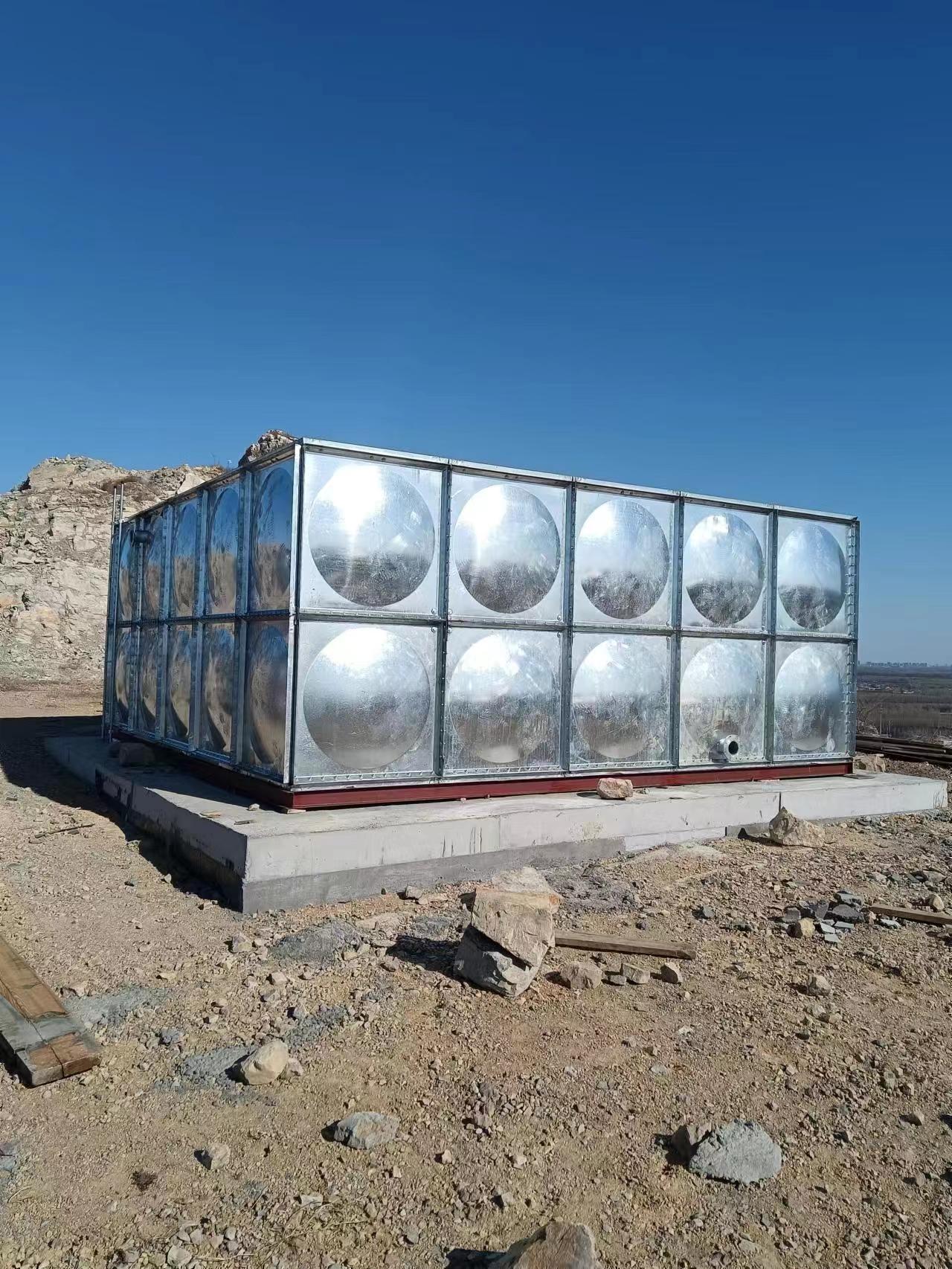
Panels are joined with M10 stainless steel bolts (304 grade) at 150 mm spacing, torqued to 25-30 N·m. EPDM gaskets with 30-35% compression ratio ensure watertightness. A 72-hour hydrostatic test follows—water level drop ≤ 3 mm passes. First-pass rate at Beijing Yuanhui is 98.7%.
4. Quality Testing
Flexural strength ≥ 160 MPa (GB/T 1449), Barcol hardness ≥ 40 (GB/T 3854), and impact toughness ≥ 25 kJ/m² (JC/T 658.1) are routinely tested on 20% of each batch.
Conclusion
FRP water tank production requires precise control from material selection to final testing. Beijing Yuanhui FRP Co., Ltd. maintains a defect rate below 0.3% through standardized procedures and a three-tier quality system, setting a replicable benchmark for the industry.