Complete Guide to FRP Water Tank Production: 12 Key Steps from Raw Materials to Finished Product
Introduction
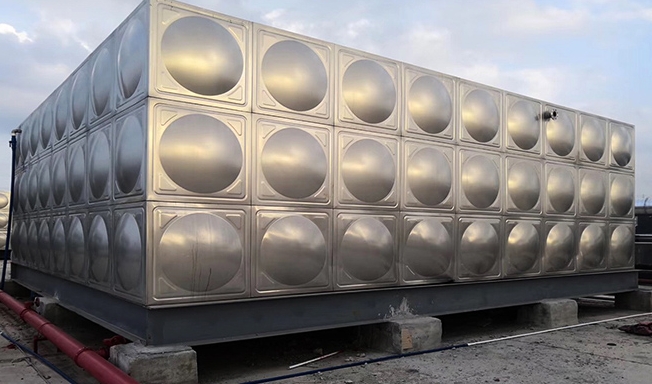
FRP (Fiberglass Reinforced Plastic) water tanks are widely used in secondary water supply, fire water storage, and industrial cooling circulation due to their corrosion resistance, light weight, high strength, and service life exceeding 30 years. According to the China Composite Materials Industry Association, annual FRP tank production in China surpassed 1.5 million cubic meters in 2023, with hand lay-up accounting for 65% of the market. Beijing Yuanhui FRP Co., Ltd., with 17 years of experience and over 6,000 completed projects, provides the following detailed process breakdown based on its production floor data.
1. Raw Material Control and Formulation
1.1 Resin System
Main options include orthophthalic polyester (general purpose, <60°C), isophthalic polyester (better corrosion resistance), and vinyl ester (for chemical media). Beijing Yuanhui FRP uses food-grade isophthalic resin for potable water tanks, with styrene emission below 0.3%, complying with GB/T 17219-1998.
1.2 Reinforcement
A combination of E-glass chopped strand mat (450 g/m²) and E-glass woven roving (0.4mm) is used. At a 3:7 weight ratio, the flexural strength of the tank panel reaches 220 MPa, 18% higher than using mat alone.
1.3 Additives
Curing agent: MEKP (≥55% active). Accelerator: cobalt naphthenate (6% cobalt). When ambient temperature drops below 15°C, the accelerator dosage must be increased from 0.5% to 1.0% to maintain gel time within 25 minutes.
2. Mold Preparation and Release
Steel molds (surface roughness Ra≤1.6μm) or FRP master molds are cleaned with acetone. A semi-permanent water-based release agent (e.g., MoldWiz® F-57) is sprayed and baked at 80°C for 30 minutes. One application yields 8-12 releases, reducing pinhole defects by 40% compared to traditional wax.
3. Forming: Hand Lay-Up and Spray-Up
3.1 Hand Lay-Up (Standard)
Workshop conditions: 20-28°C, RH ≤70%. Steps: ① Apply gelcoat (0.4-0.6mm, two cross coats); ② Place surface veil (30g/m²), debulk with bristle roller; ③ Alternate mat and roving layers, resin consumption 1.2-1.5 kg/m²; ④ Final thickness 6-8mm. Beijing Yuanhui's three-roller technique keeps void content below 1.5%.
3.2 Spray-Up (Large Batches)
A dual-component gun mixes resin and catalyst inline, spraying chopped fibers (25-50mm) at 3-5 kg/min. Efficiency is 3x hand lay-up, but fiber content variation (±5%) requires frequent calibration.
4. Curing, Demolding, and Post-Processing
4.1 Curing Schedule
At 25°C, 8-12 hours to reach demold hardness (Barcol ≥35). Oven curing at 50-60°C cuts time to 3-4 hours, but heating rate must be ≤5°C/min to avoid exothermic burn. Beijing Yuanhui uses infrared heaters in winter to maintain a 6-hour cycle.
4.2 Demolding and Trimming
Compressed air is blown at the mold edge, combined with light mallet tapping. Panels undergo post-curing at 70°C for 2 hours, raising Tg from 55°C to 80°C. Trimming uses diamond blades at 40m/s to prevent delamination.
5. Assembly and Final Inspection
5.1 Bolting and Sealing
Stainless steel 304 bolts (M12-M16) with galvanized inserts. EPDM gaskets (Shore A 60±5, 4mm thickness). Torque specs: M12 = 30Nm, M16 = 50Nm, ±10% tolerance.
5.2 Full Water Test
Per GB/T 17219, fill to design level and hold 24 hours; water drop ≤3mm passes. Ultrasonic thickness gauging (e.g., Olympus 38DL PLUS) checks panel thickness (±0.5mm). Beijing Yuanhui FRP reports a 99.3% first-pass rate, with flange flatness deviation being the main defect (0.5%).
Conclusion
FRP water tank production integrates materials science, molding technology, and assembly precision. Every parameter shift affects service life. Beijing Yuanhui FRP Co., Ltd. emphasizes that standardized SOPs and real-time QC data are the keys to consistency. Buyers should prioritize manufacturers with complete process documentation and third-party testing (e.g., hygiene permits, mechanical reports) over price alone.