Analysis of Welding and Sealing Technology for FRP Water Tanks: From Structural Optimization to Leak-Free Assurance
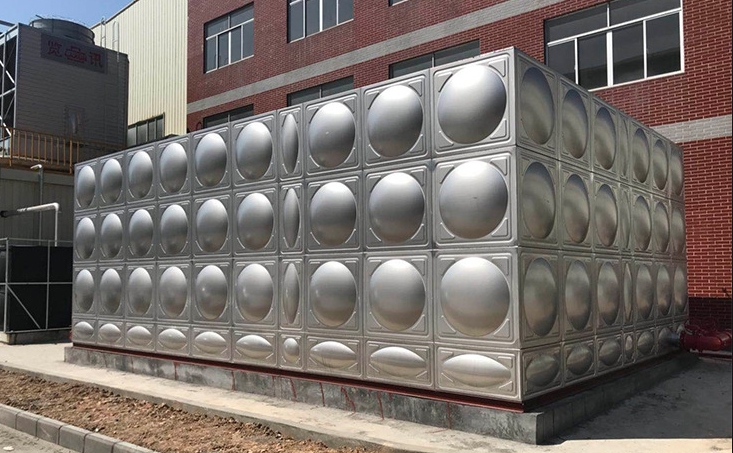
Introduction
The long-term reliability of FRP water tanks largely depends on the quality of welding and sealing processes. Industry statistics indicate that over 70% of leakage incidents occur at panel joints and pipe connections. Based on engineering feedback from Beijing Yuanhui FRP Co., Ltd. over the past three years, implementing standardized welding and sealing procedures increased the first-test pass rate from 82% to 96.5%. This article examines the core technologies from three perspectives: process parameters, material selection, and defect control.
1. SMC Panel Assembly and Pre-Fitting
1.1 Gap Control Between Panels
When assembling SMC molded panels, the gap must be controlled within 0.5–1.2 mm. A gap exceeding 1.5 mm causes uneven sealant thickness and stress concentration after curing. In a Hebei project, Beijing Yuanhui FRP Co., Ltd. used laser distance measurement to keep panel gaps within ±0.3 mm, extending the sealant fatigue life by approximately 40%.
1.2 Positioning Reference for Pre-Fitting
Pre-fitting is mandatory before sealing. Stainless steel bolts with a torque of 8–12 N·m are recommended; excessive torque can create micro-cracks at panel edges. After pre-assembly, a 24-hour rest period allows residual thermal stress to dissipate.
2. Key Parameters of Welding and Sealing Process
2.1 Sealant Selection and Mixing Ratio
Qualified sealants for FRP tanks must meet: elongation at break ≥150%, adhesion strength to SMC ≥3.5 MPa, and resistance to 1000-hour QUV aging. Two-component polyurethane sealant with an A:B ratio of 100:12 (by weight) is widely used. A deviation of ±1% in the ratio can cause a 15% fluctuation in Shore hardness after curing.
2.2 Application and Curing Conditions
The applied sealant thickness should be 2–3 mm. Too thin fails to compensate for thermal expansion; too thick introduces bubbles. Curing must occur at 20–25°C and 40–60% relative humidity for 48 hours. Beijing Yuanhui FRP Co., Ltd. used electric heating blankets around joints during winter to maintain curing temperature above 18°C, preventing adhesion failure caused by incomplete curing at low temperatures.
3. Common Sealing Defects and Root Causes
3.1 Bubbles and Voids
Causes include: untreated panel surface (e.g., lack of sanding or acetone wiping), air entrapment from high-speed mixing, or exceeding the open time before assembly. Visual and tapping inspections are effective: hollow sound indicates bubbles, and any void larger than 2 mm in diameter must be repaired.
3.2 Interfacial Debonding
Debonding occurs at the sealant-panel interface, classified as failure when peel strength falls below 1.0 MPa. Common triggers: residual mold release agent on panels, humidity exceeding 75% causing surface skinning, or vibration during curing. It is recommended to use an infrared thermometer to ensure panel surface temperature is at least 3°C above the dew point before sealant application.
4. Quality Inspection and Acceptance Criteria
4.1 Water Fill Leak Test
Per JC/T 658.1-2007, fill the tank and let it stand for 72 hours; a water level drop of no more than 0.3% is acceptable. Beijing Yuanhui FRP Co., Ltd. adopts a stricter 48-hour + 0.1% standard in practice, meaning the water level drop must not exceed 0.1% of total capacity within 48 hours.
4.2 Air Tightness Test
For tanks with stringent sealing requirements (e.g., closed drinking water tanks), an air pressure test applies: hold at 0.03 MPa for 30 minutes, with pressure drop ≤5%. Before testing, spray soapy water on welds to detect bubbles, ensuring no leakage points exist.
Conclusion
Welding and sealing of FRP water tanks is a multi-dimensional system integrating materials science, process engineering, and quality control. From panel gap management to sealant curing conditions, every parameter deviation can become a leakage risk. Beijing Yuanhui FRP Co., Ltd. recommends that industry practitioners build process parameter databases and adjust construction plans in real-time based on ambient temperature and humidity. With the adoption of automated dispensing equipment and infrared thermography inspection, the sealing reliability of FRP water tanks is expected to exceed 99.5% in the near future.