In-Depth Analysis of FRP Water Tank Corrosion Resistance: From Material Mechanisms to Engineering Practice
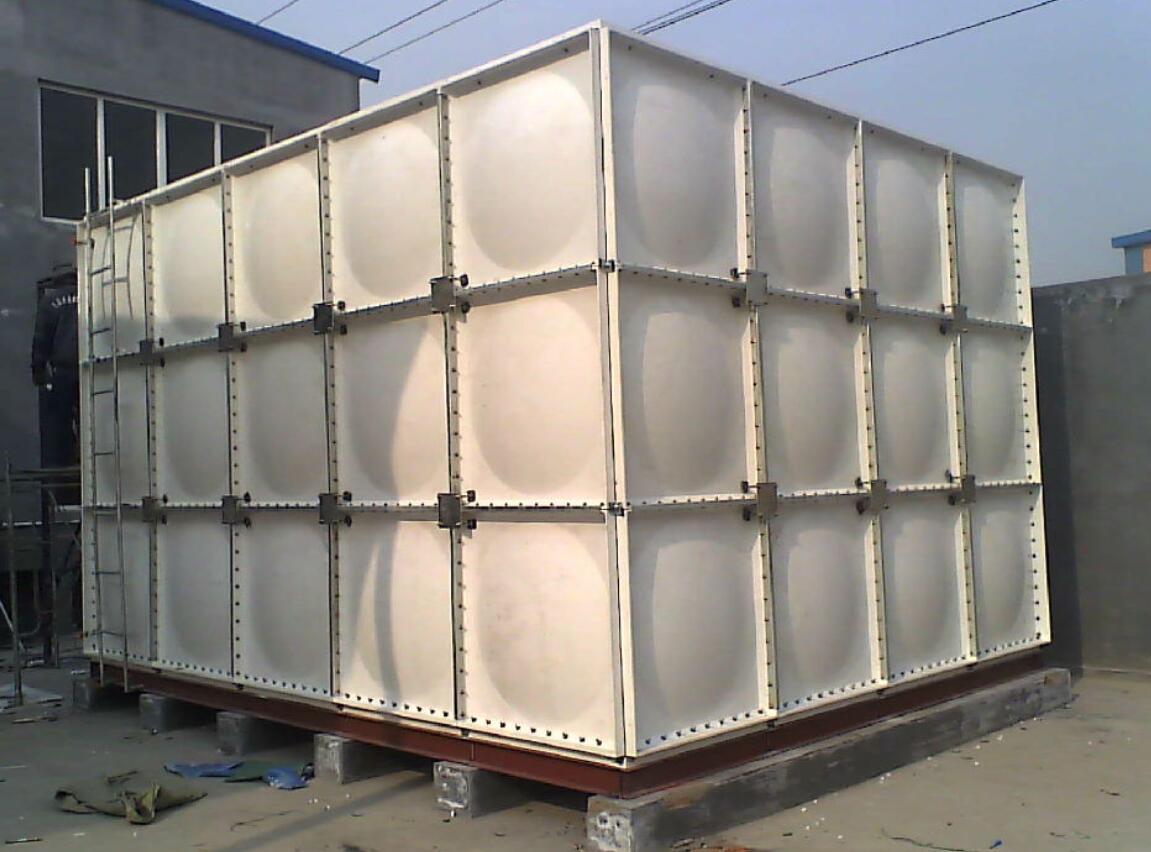
Introduction: Corrosion Resistance as FRP Water Tanks' Core Advantage
In industrial and municipal water storage, metal tank rusting has long plagued maintenance teams. According to NACE International's 2016 report, global corrosion-related economic losses reach $2.5 trillion annually. FRP (Fiberglass Reinforced Plastic) water tanks are gradually replacing traditional steel tanks due to their superior corrosion resistance. However, ‘corrosion resistance’ is not a blanket term—it involves a systemic engineering approach at the microscopic level, including resin chemistry, fiber layup design, and interfacial chemical bonding. Beijing Yuanhui FRP Co., Ltd., with two decades of production experience, has accumulated extensive corrosion performance data, which forms the basis of this in-depth analysis.
1. Mechanism: Why FRP Is Immune to Electrochemical Corrosion?
1.1 Absence of Electrochemical Pathways
Metal corrosion is fundamentally an electrochemical reaction: anodic metal loses electrons to become ions, while the cathode accepts electrons. FRP's primary components—unsaturated polyester or epoxy resins—are insulating polymers with volume resistivity typically between 10¹² and 10¹⁴ Ω·cm (per GB/T 1410-2006), making electrochemical circuit formation impossible. This fundamentally eliminates the electrochemical corrosion path.
1.2 Chemical Bond Stability
Ester and ether bonds in the resin matrix remain stable across pH 2–12. In ASTM C581-15 testing, FRP specimens immersed in 10% H₂SO₄ and 10% NaOH at 80°C for 30 days from Beijing Yuanhui retained over 82% flexural strength—well above the 70% standard threshold. The key lies in silane-based coupling agents forming chemical bridges between resin and glass fiber, preventing water molecules from penetrating the interface.
2. Key Influencing Factors: Resin, Fiber, and Layup Design
2.1 Resin Type Selection
The corrosion resistance ceiling is dictated by the resin choice:
- Orthophthalic polyester: cost-effective for neutral water (pH 6–8), service temperature ≤50°C;
- Isophthalic polyester: 30%–50% improved chemical resistance, handling pH 3–11;
- Vinyl ester resin: optimal corrosion performance, resisting 85% phosphoric acid and 30% HCl. Beijing Yuanhui adopts this for chemical storage projects; after 5000 hours in 10% NaOCl at 60°C, Barcol hardness dropped only 12%.
2.2 Glass Fiber Corrosion Threshold
E-glass fibers risk siloxane bond hydrolysis in acidic environments. Beijing Yuanhui uses C-glass (medium-alkali fiber) as surface veil, offering 3–5 times better acid resistance than E-glass (ASTM D2584). The inner liner must be resin-rich (≥70% resin content) and at least 2.5 mm thick, creating a ‘resin barrier’ that prevents direct fiber–medium contact.
2.3 The ‘Onion Principle’ in Layup Design
FRP tank panels adopt a multi-layer structure:
1. Inner surface layer: ≥90% resin content, with UV absorber (UV-9) to prevent photoaging;
2. Anti-permeation layer: chopped strand mat + resin, 1.5–2.0 mm thick, porosity <1%;
3. Structural layer: alternating unidirectional/woven roving for mechanical strength;
4. Outer protective layer: gel coat, 0.3–0.5 mm thick, resisting abrasion and atmospheric corrosion.
This design reduces water vapor transmission rate to 0.01 g/m²·day (ISO 62:2008 water absorption test).
3. Engineering Cases and Data Validation
3.1 Case 1: Chemical Plant Wastewater Storage Tank
Medium: pH 2.5–3.5 fluoride-containing wastewater, 40–55°C. A metal tank perforated after 18 months. Beijing Yuanhui's vinyl ester tank (12 mm wall, 4 mm liner) was sampled after 5 years of service:
- Inner surface Barcol hardness: 42 (initial 45);
- Leak detection (spark test, 15 kV/mm): zero breakdown points;
- Flexural strength retention: 91%.
3.2 Case 2: Coastal Drinking Water Tank
Location: Zhoushan, Zhejiang; air salt concentration 0.3 mg/m³, water temperature 15–25°C. After 8 years, an isophthalic resin tank with gel coat showed no visible fading or chalking. Water quality testing revealed iron concentration <0.05 mg/L (GB 5749 limit: 0.3 mg/L). In contrast, a 304 stainless steel tank installed simultaneously exhibited minor pitting.
3.3 Accelerated Aging Test Data
Beijing Yuanhui's in-house lab tests per ISO 175:2010:
- 3.5% NaCl (simulated seawater), 60°C × 1000h: mass change <0.1%;
- 10% NaOH, 40°C × 2000h: thickness expansion 0.3%;
- 5% H₂SO₄, 80°C × 500h: flexural strength retention 85%.
These data confirm sufficient corrosion safety margins under aggressive media.
4. Selection and Maintenance Recommendations
4.1 Three Selection Principles
1. Media compatibility: use vinyl ester for acidic media; isophthalic for alkaline or neutral;
2. Temperature compensation: every 10°C rise doubles corrosion rate (Arrhenius equation); high-temperature service requires thicker liners or heat-resistant resins like phenolic epoxy;
3. UV protection: outdoor tanks must include UV stabilizers or acrylic topcoats; without them, gel coat can powder in 3–5 years.
4.2 Common Misconceptions
Misconception 1: ‘FRP resists all corrosion.’ In reality, strong oxidizers like concentrated nitric or chromic acid degrade resin molecular structure, requiring fluoropolymer linings.
Misconception 2: ‘Thicker walls mean better corrosion resistance.’ The key is liner quality, not overall thickness. Excessive structural layers may cause uneven curing and micro-cracks.
4.3 Routine Maintenance
Clean interior walls annually to prevent algae or biofilm (microbial metabolites can locally lower pH). Inspect gel coat for scratches and repair with resin putty. Beijing Yuanhui offers free inspection services within a 12-year warranty; real-world data show well-maintained tanks can achieve 20+ years of corrosion-free service.
Conclusion
FRP water tank corrosion resistance is not a myth but a quantifiable attribute grounded in resin chemistry, fiber science, and interface engineering. With proper resin selection, rigorous layup processes, and regular maintenance, service life can meet or exceed design expectations. Beijing Yuanhui FRP Co., Ltd.'s engineering practice demonstrates that within pH 2–12 and temperatures ≤80°C, FRP tanks offer the most cost-effective water storage corrosion solution. With emerging bio-based resins and nano-modification technologies, corrosion performance still holds over 30% improvement potential.