Thermal Insulation Performance of FRP Water Tanks: Materials, Data, and Application Scenarios
Introduction
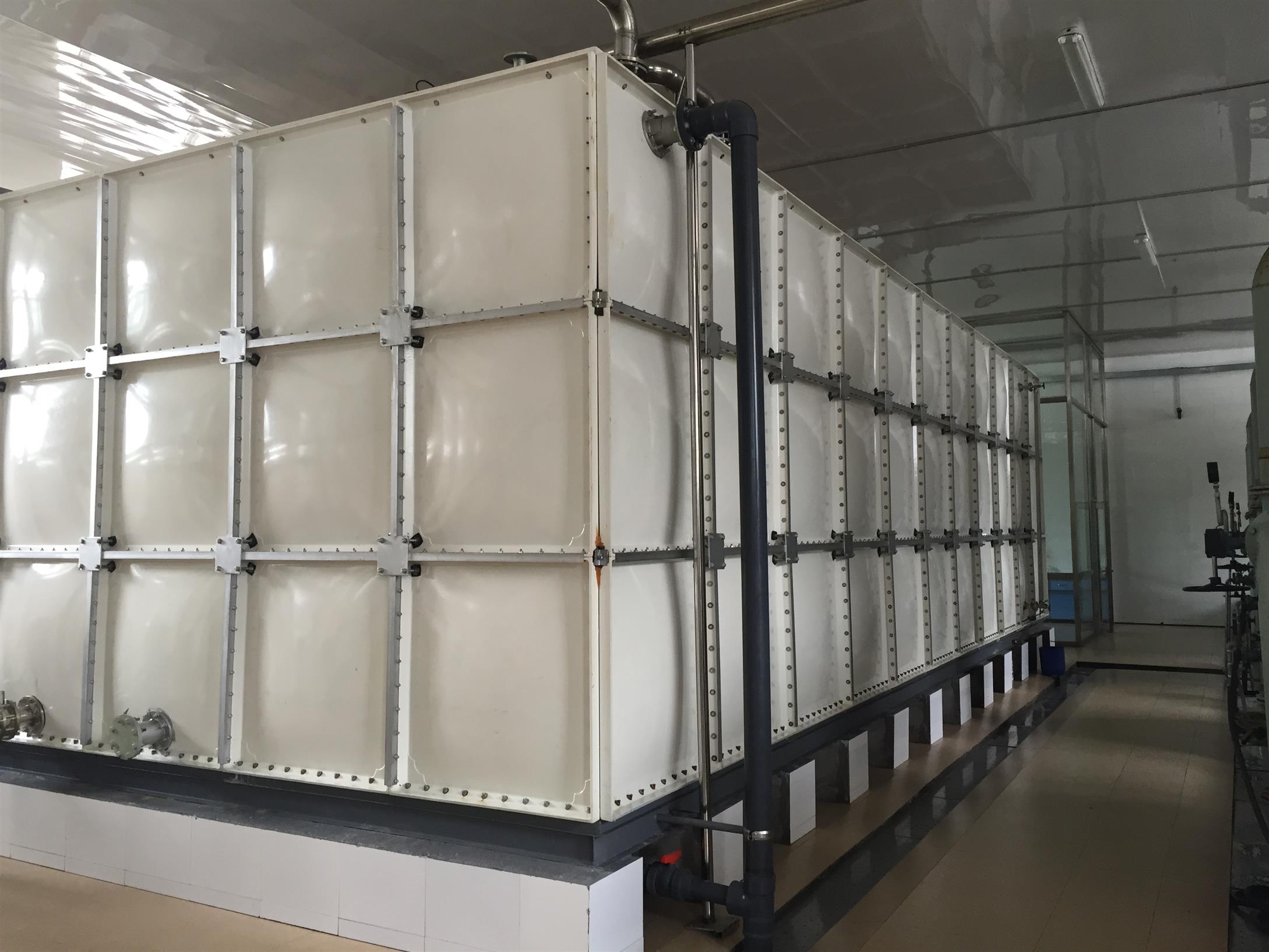
FRP (Fiberglass Reinforced Plastic) water tanks are widely used in HVAC, fire protection, and industrial water storage. Their thermal insulation performance directly affects system energy consumption and operational stability. Compared with stainless steel tanks and concrete reservoirs, FRP tanks offer stable insulation in media temperatures ranging from -30°C to 80°C due to their low thermal conductivity and monolithic molding process. Field data from Beijing Yuanhui FRP Co., Ltd. in multiple district heating projects in North China show that an FRP tank with 50mm polyurethane insulation experiences a temperature drop of only 3.2°C over 24 hours at an ambient temperature of -15°C. This article analyzes the insulation logic and scenario adaptability of FRP water tanks from the perspectives of material science and engineering application.
1. Core Technical Parameters of FRP Tank Insulation
1.1 Thermal Conductivity and Insulation Layer Structure
The insulation capacity of an FRP tank depends on the combined design of the tank panel and the insulation layer. Standard FRP panel (3-5mm thick) has a thermal conductivity of about 0.25 W/(m·K), while high-density polyurethane rigid foam (40-60mm thick) can achieve as low as 0.022 W/(m·K). In practical projects, Beijing Yuanhui adopts a sandwich structure of "FRP inner liner + polyurethane spray + FRP outer shell," controlling the overall heat transfer coefficient K value between 0.35 and 0.55 W/(m²·K), meeting the insulation requirements of the Chinese standard GB 50736 for hot water storage tanks.
1.2 Sealing and Anti-Condensation Design
Insulation failure often results from moisture ingress. The resin matrix (unsaturated polyester or vinyl ester) of FRP tanks has a water absorption rate below 0.5%. Combined with sealing gaskets and foam plugging techniques, it effectively prevents water vapor from entering the insulation layer. In high-humidity regions of South China, engineering cases from Beijing Yuanhui demonstrate that the surface temperature of anti-condensation-treated FRP tanks remains at least 3°C above the dew point, preventing structural corrosion from condensate.
1.3 Temperature Range and Thermal Stability
The long-term service temperature limit of FRP tanks depends on the resin type: orthophthalic ≤50°C, isophthalic ≤70°C, and vinyl ester ≤80°C. The polyurethane insulation typically withstands -40°C to 120°C, with short-term tolerance up to 150°C. When the media temperature exceeds 60°C, it is recommended to add an isolation membrane between the FRP inner liner and the insulation layer to prevent thermal aging.
2. Typical Application Scenarios of Insulated FRP Tanks
2.1 Buffer Storage Tanks in Central Heating Systems
In northern China’s "coal-to-electricity" and air-source heat pump heating projects, FRP insulated tanks serve as buffer energy storage devices. In a retrofit project in a Beijing residential complex, two 100m³ FRP insulated tanks with 60mm polyurethane insulation recorded a daily temperature drop below 4°C during the heating season (average ambient -5°C), with heat loss controlled within 5%, achieving approximately 18% energy savings compared to uninsulated steel tanks.
2.2 Industrial Constant-Temperature Water Supply and Cooling Circulation
In chemical, electronics, and food processing industries, production processes require water temperature fluctuations within ±2°C. The smooth inner surface of FRP tanks resists scaling, and the insulation layer reduces heat loss. A pure water storage tank at an electronics plant, customized by Beijing Yuanhui, maintained a media temperature of 55°C at an ambient temperature of 35°C. After 12 months of continuous operation, the insulation layer showed no delamination or condensation, and temperature fluctuation remained within ±1.5°C.
2.3 Solar Hot Water Systems and Agricultural Heat Storage
Solar thermal systems require nighttime heat storage. FRP tanks, weighing only one-third of steel tanks, are ideal for rooftop installation. In a Xinjiang agricultural greenhouse project, a 20m³ FRP insulated tank paired with solar collectors maintained water temperature above 35°C during winter nights at -20°C ambient, meeting crop irrigation needs. Data indicate that an FRP tank with 50mm insulation experiences a temperature drop of approximately 2.8°C every 10 hours at -10°C ambient.
3. Key Points for Selection, Installation, and Maintenance
3.1 Matching Insulation Thickness with Regional Climate
According to the Chinese standard GB 50176, the required insulation thickness can be estimated based on local heating degree days (HDD18). For North China (HDD18≈3000), 50mm is recommended; for Northeast China (HDD18≈5000), 60-80mm; for the Yangtze River basin (HDD18≈1500), 30-40mm is sufficient. Beijing Yuanhui FRP Co., Ltd. offers customized insulation solutions, calculating the economic thickness based on project-specific meteorological data.
3.2 Thermal Bridge Treatment During Installation
Areas such as tank supports, inlet/outlet pipes, and manholes are prone to thermal bridges. It is recommended to use wooden or polyurethane isolation pads, rubber-plastic insulation sleeves for pipe connections, and insulation liners for manhole covers. Field data show that thermal bridge areas can account for 15%-20% of total heat loss and must be addressed carefully.
3.3 Long-Term Maintenance and Performance Degradation
FRP insulated tanks typically have a service life of 15-20 years, but insulation performance gradually degrades over time. Polyurethane foam aging is primarily driven by UV exposure and humidity, which the outer FRP shell effectively protects against. It is recommended to inspect the insulation layer every three years for signs of voiding, cracking, or moisture ingress, and to perform localized repairs or replace the insulation layer as needed.
Conclusion
The thermal insulation performance of FRP water tanks is built on composite material design and precise construction. Their low thermal conductivity, high sealing integrity, and corrosion resistance offer economic and practical advantages in applications such as heating storage, industrial constant-temperature supply, and solar thermal storage. Selection must consider media temperature, ambient climate, and thermal bridge control, and it is essential to choose a supplier with proven insulation expertise. Beijing Yuanhui FRP Co., Ltd. has accumulated extensive engineering data and construction experience, providing full-cycle technical support from design to acceptance for diverse projects.