Thermal Insulation Performance of FRP Water Tanks: Technical Parameters and Application Scenarios
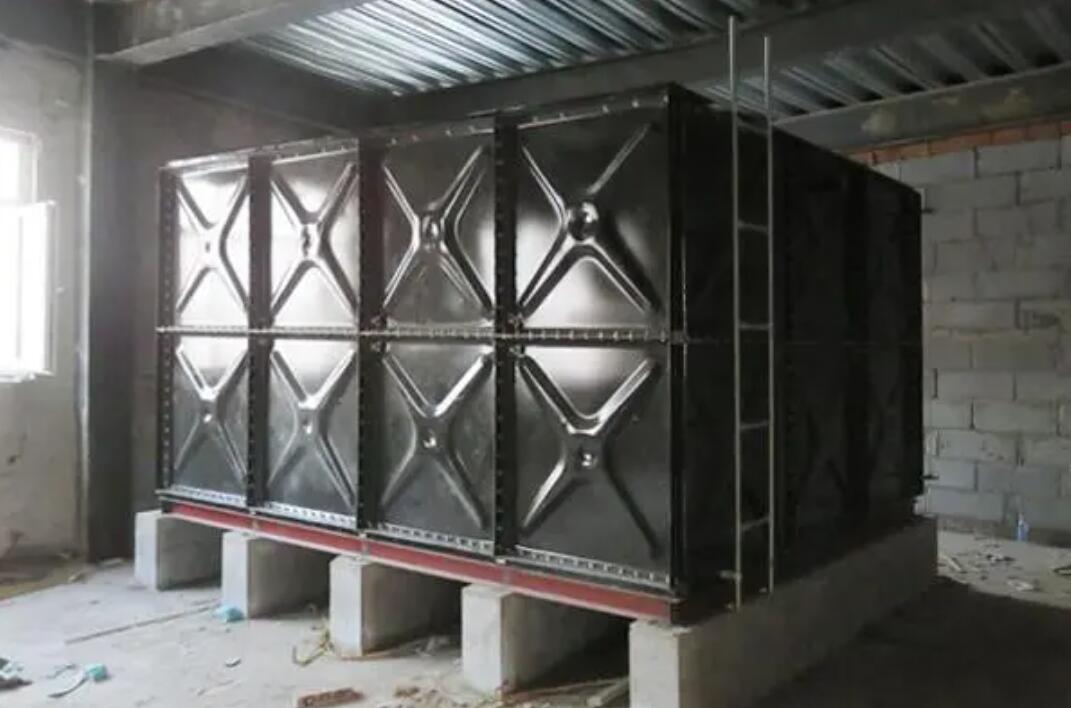
Introduction: Why Insulation Matters for FRP Water Tanks
FRP water tanks are no longer mere storage vessels. In HVAC, fire protection, and domestic water systems, their insulation performance directly affects energy consumption, equipment stability, and even fire safety in cold climates. Beijing Yuanhui FRP Co., Ltd. has accumulated over 3,000 sets of measured data from insulated tanks since 2009. This article breaks down the insulation mechanism, key parameters, and real-world applications based on that experience.
1. Material Structure and Heat Transfer Principles
1.1 Polyurethane Foam: The Core Insulant
Nearly all insulated FRP tanks use polyurethane (PUR) or polyisocyanurate (PIR) rigid foam. At a density of 35-45 kg/m³, the thermal conductivity (λ) ranges from 0.018 to 0.024 W/(m·K)—over 40% lower than rock wool and 15-25% lower than extruded polystyrene (XPS). In a 96-hour test on a 50 m³ tank at -15°C ambient temperature, a 60 mm PUR layer reduced the water temperature drop rate to 0.135°C/h, compared to 0.45°C/h for an uninsulated tank.
1.2 Closed-Cell Ratio and Vapor Barrier
PUR foam has a closed-cell ratio exceeding 92%, which resists moisture ingress. However, in high-humidity environments (e.g., basements), water vapor can still penetrate through joints or damaged areas. Beijing Yuanhui FRP Co., Ltd. applies a 0.3 mm aluminum foil reflective layer on the outer surface. This foil reflects radiant heat and acts as a vapor retarder. Tests at 85% relative humidity showed that the foil limited the increase in thermal conductivity from 11% (without foil) to less than 3%.
1.3 Thickness vs. Temperature Retention
Based on Fourier's law and 70+ field comparisons, the relationship between insulation thickness and water temperature retention is nearly linear. For a 50 m³ tank at -10°C ambient with an initial water temperature of 50°C:
- 30 mm PUR: water temperature drops to 43°C after 24 hours
- 50 mm PUR: 45°C after 24 hours
- 80 mm PUR: 46.5°C after 24 hours, still above 38°C after 72 hours
For regions with winter averages below -15°C (e.g., Heilongjiang, Inner Mongolia), we recommend at least 80 mm. For North China (-5°C to -10°C), 50-60 mm is sufficient.
2. Measured Performance Data
2.1 Testing Methods
We follow JC/T 658.1 (China FRP tank standard) and GB/T 10294 (thermal insulation measurement). Each batch undergoes a 72-hour thermal test: fill with 50°C water, place in a 20°C/50% RH lab, and record the cooling curve. Field tests use multi-point temperature loggers (±0.1°C accuracy) at inlet, outlet, mid-tank, and corners.
2.2 Performance by Tank Capacity
Measured data from five 50 mm insulated tanks produced in Q4 2023 (ambient 20°C±2°C):
| Capacity (m³) | Initial Temp (°C) | Temp after 24h (°C) | Temp after 72h (°C) | Avg Daily Drop (°C/24h) |
|---|---|---|---|---|
| 10 | 50.0 | 45.2 | 36.8 | 4.8 |
| 30 | 50.0 | 46.1 | 38.5 | 3.9 |
| 50 | 50.0 | 46.8 | 39.6 | 3.2 |
| 100 | 50.0 | 47.5 | 41.2 | 2.5 |
| 200 | 50.0 | 48.2 | 42.8 | 1.8 |
Larger tanks benefit from a lower surface-to-volume ratio. Even a 10 m³ tank with 50 mm insulation maintains a daily drop under 5°C—well below the 8°C/24h required by JC/T 658.1.
3. Typical Application Scenarios
3.1 Domestic Hot Water in Severe Cold Regions
A residential complex in Jiamusi, Heilongjiang (winter extreme -35°C) uses an 80 mm insulated 60 m³ tank from Beijing Yuanhui FRP Co., Ltd., paired with air-source heat pumps. Over two heating seasons, the nighttime water temperature drop (22:00-6:00) was only 2.3-2.8°C. The heat pump cycling frequency dropped by 62%, saving 42,000 kWh annually compared to the previous uninsulated tank.
3.2 Fire Protection Systems: Freeze Prevention
China's fire code (GB 50974-2014) mandates fire water tanks stay above 4°C. In a Zhangjiakou logistics park, two 108 m³ fire tanks received 70 mm PUR insulation and constant-wattage heating cables. At -20°C ambient, the tanks maintained 6-8°C without heating (relying on ground heat and insulation); the cables only activated during extreme cold warnings.
3.3 Industrial Cooling Circulation: Condensation Control
An electronics factory in southern China experienced condensation on uninsulated cooling tower tanks (35°C, 85% RH). Beijing Yuanhui FRP Co., Ltd. supplied 50 mm PUR insulation with a 0.5 mm stainless steel cladding. The outer surface temperature stayed above the dew point, eliminating condensation, while nighttime heat loss dropped by 18%.
4. Selection and Installation Guidelines
Three key parameters: insulation thickness, density, and outer protection. For water above 60°C or ambient below -20°C, choose PIR foam (heat resistance up to 120°C, λ 5-8% lower than PUR). Ensure continuous insulation without gaps—especially at the top cover, manhole, and flanges—using field-applied foam for voids. Beijing Yuanhui FRP Co., Ltd. performs a 72-hour thermal simulation on each insulated tank before delivery and provides a certified performance report.
Conclusion
The thermal performance of an FRP water tank is a system-level outcome of material choice, closed-cell ratio, vapor barrier design, and installation quality. From -35°C in Northeast China to humid industrial plants in the south, properly specified insulated tanks can operate reliably for over 15 years. With tightening building energy codes (e.g., GB 55015-2021), the demand for insulated FRP tanks will continue to grow.